Proudly serving Mesa, Gilbert, Chandler, Tempe, Queen Creek, Scottsdale & surrounding areasCall or Text 24/7: 602-559-1623
Aerial drone photo of residential neighborhoods and desert vegetation in Mesa, AZ.

EV Charger Installation in Phoenix, AZ for Tesla Wall Connectors & Commercial Ports

Mesa EV Chargers provides Tesla Wall Connector installation for homes and businesses throughout Phoenix, Arizona. We also install NEMA 14-50 outlets and commercial EV charging stations to suit different vehicles and parking layouts. Our work includes dedicated circuits, panel upgrades, hardwired chargers, and support for fleet and apartment charging. Repair and replacement services help address faults or changing charging needs.

Phoenix heat and heavy air-conditioning demand make panel capacity an essential part of planning a charger installation. Older electrical service may need a load calculation before it can support hours of continuous charging. We inspect the panel and cable route in person, then provide a flat-rate quote before work begins. Contact us for a free estimate based on your vehicle, parking location, and existing electrical setup.

From Arcadia and Biltmore to Ahwatukee, Laveen, and Desert Ridge, our installation process covers the permit, electrical work, testing, and final inspection.

★ ★ ★ ★ ★4.9/5 Customer Rating - 19 Years of Electrical Experience - 2,000+ Charging Projects Completed - Licensed, Bonded & Insured - Serving Homes, Fleets & Businesses
Home & Commercial Charging

EV Charger Services in Phoenix, AZ

Choose a charging setup around your vehicle, available electrical capacity, and where you park. We install and service equipment in garages, carports, workplace parking areas, fleet depots, and multifamily properties. For property owners coordinating projects in Phoenix and Fountain Hills, AZ , we assess each site separately for panel capacity and conduit routing.

Tesla Wall Connector Installation
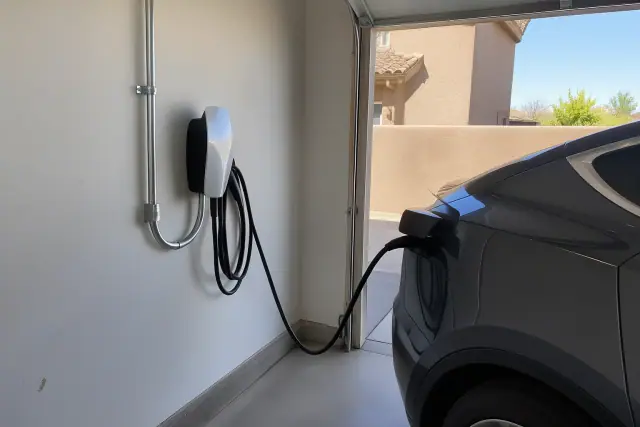
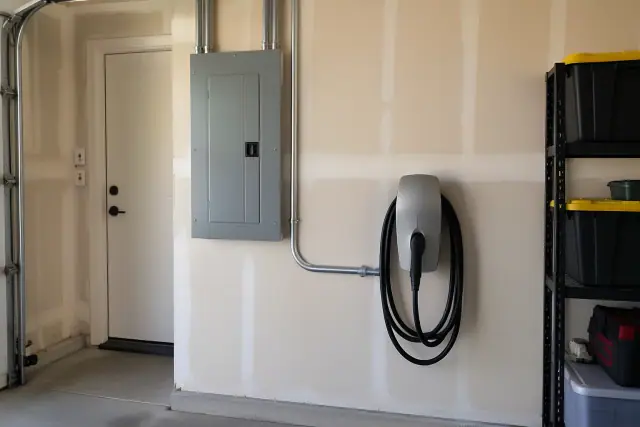
Tesla Wall Connector installation with electrical conduit on an interior wall in Phoenix, AZ.

We install hardwired Tesla Wall Connectors for Model 3, Model Y, Model S, and Model X vehicles. A site assessment matches the charger configuration to your electrical capacity and parking layout, with power sharing available for households charging two EVs.

Explore Service
NEMA 14-50 Outlet Installation

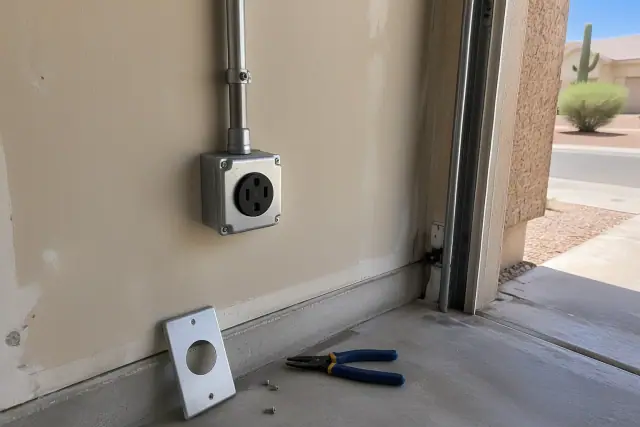
NEMA 14-50 outlet installation for EV chargers in a residential garage in Phoenix, AZ.

A dedicated NEMA 14-50 outlet supports compatible portable charging equipment, including a Tesla Mobile Connector. We assess panel capacity and outlet placement so a plug-in setup fits your garage and charging routine.

Explore Service

Commercial EV Charger Installation

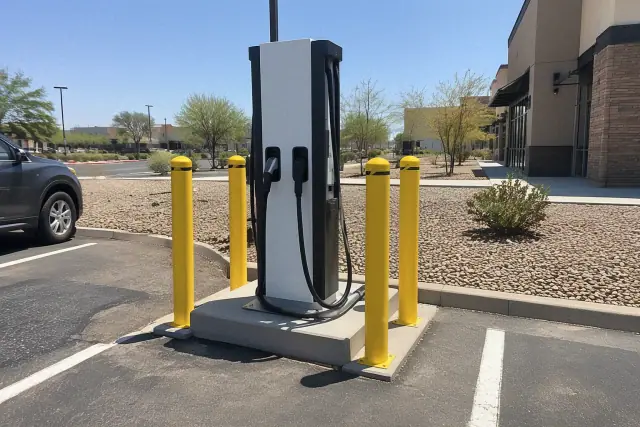
Dual-port EV charger installed on a concrete island with yellow bollards in Phoenix, AZ.

Office parks, retail centers, and hotels need charging plans that account for existing building loads and parking access. We coordinate conduit routes with property management and plan multiple stations with power management where appropriate.

Explore Service

EV Charger Repair & Troubleshooting

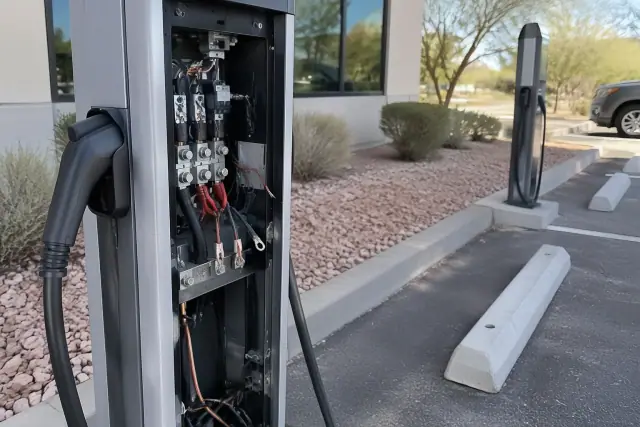
Technician repairing an EV charger at a commercial building in Phoenix, AZ.

Repeated breaker trips, fault codes, and lost charger communication need diagnosis at the equipment, circuit, and panel. We check for heat-damaged connectors and outdoor corrosion before recommending a repair or replacement.

EV Charger Panel Upgrades

EV charger panel upgrade with electrical conduit on a drywall wall in Phoenix, AZ.

Homes built before 2000 may still have 100-amp panels with limited room for EV charging alongside HVAC and appliances. Where a load calculation supports an upgrade, we install 150- or 200-amp service and coordinate meter work with Salt River Project or Arizona Public Service.

EV Charger Dedicated Circuit Installation

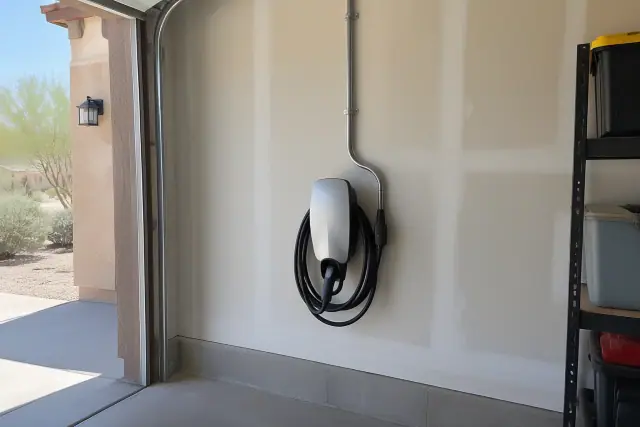
Hardwired EV charger installation with exposed conduit on a garage wall in Phoenix, AZ.

We install dedicated 240V circuits for Level 2 chargers, matching the wiring and breaker to the selected equipment and charging load. Circuit planning starts with a panel assessment and includes the route to your garage, carport, or other parking location.

Hardwired EV Charger Installation

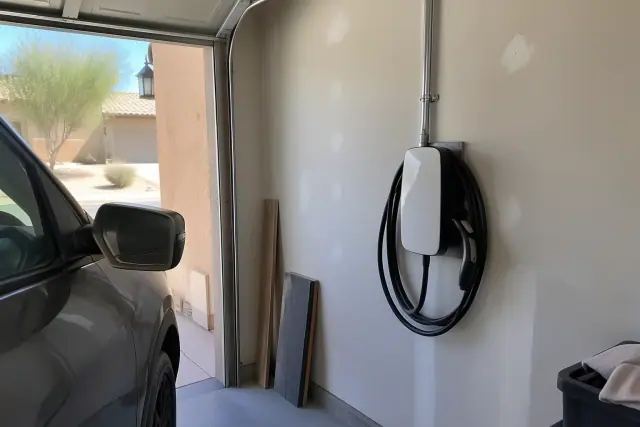
Hardwired EV charger installation on an interior wall with metal conduit in a Phoenix, AZ garage.

A hardwired installation connects the charger directly to its dedicated circuit without a plug or receptacle. We route conduit through stucco, block, or drywall and plan a secure mount for garage or exterior locations.

Fleet EV Charging Station Installation

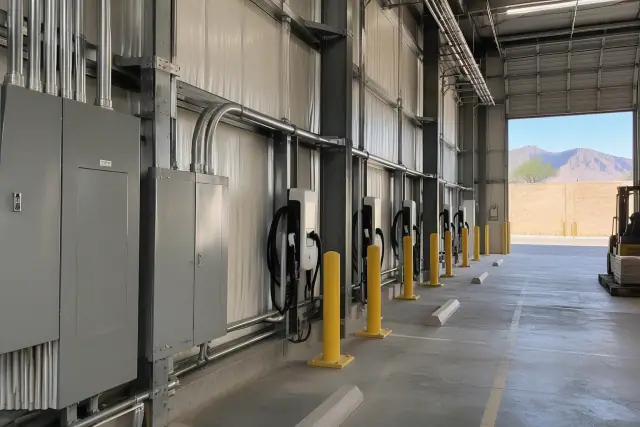
EV charging station installation inside an industrial warehouse in Phoenix, AZ.

Delivery vans, service trucks, and rideshare fleets need coordinated charging across multiple vehicles. We plan load management, off-peak scheduling, and phased installation around current fleet size and future vehicle purchases.

Multifamily & Apartment EV Charger Installation

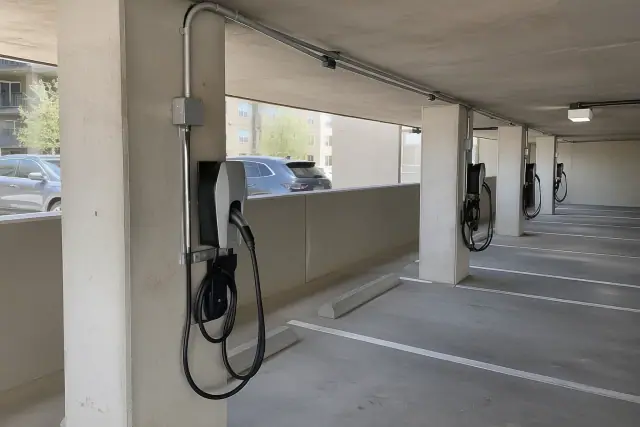
EV charger installation with mounted charging units and overhead conduit in Phoenix, AZ.

Apartment and condo projects require coordination across shared electrical rooms, parking areas, and property management. Power sharing and submetering help allocate capacity and tenant charging costs as stations are added across buildings.

EV Charger Replacement & Upgrades

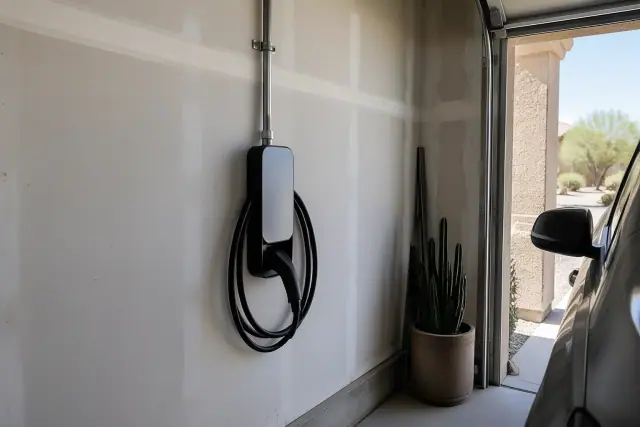
Wall-mounted EV charger installation on a drywall interior in Phoenix, AZ.

Older Level 2 units, including equipment installed before 2018, may lack the output or power-sharing features a property now needs. We evaluate the existing circuit and recalculate available capacity before installing replacement equipment.

Charging Setup Options

Choose an EV Charger for Your Property

The right equipment depends on your vehicle, daily driving, electrical capacity, and parking layout. These checks help distinguish a straightforward charger installation from a project that needs new service capacity or a broader charging plan.

Match Charging to Your Vehicle

Your onboard charger and daily driving affect how much charging output you can use. A Wall Connector can deliver up to roughly 44 miles of range per hour at 48 amps, while the appropriate setting still depends on your vehicle and available circuit capacity.

Check Capacity Before Upgrading

A load calculation considers air conditioning, appliances, and the proposed EV circuit together. Available breaker space alone does not establish capacity, and power sharing may help a two-EV household avoid an unnecessary service upgrade.

Choose Plug-In or Hardwired Charging

A compatible portable charger uses a NEMA 14-50 outlet, while a hardwired charger connects directly to the circuit. We compare the parking layout, existing electrical setup, and desired output before recommending either approach.

Plan the Mounting Location

Garage, carport, and exterior installations need different conduit routes and mounting details. Stucco and block walls require suitable anchors, and exposed cable routes need attention to direct afternoon sun and UV exposure.

Allow for More Vehicles

A second household EV or an expanding workplace fleet changes the charging plan. Power sharing distributes available capacity among active vehicles, while a phased commercial layout leaves room to add stations as needs grow.

Compare the Complete Scope

A useful quote accounts for hardware, labor, permits, and the actual conduit route. Long runs and panel work change the scope, so we inspect the property before providing the flat-rate price.

Heat, Capacity & Charger Faults

Common EV Charging Problems in Phoenix

Sustained charging can expose electrical limitations that shorter appliance cycles do not. Phoenix heat, dust storms, and monsoon humidity also affect exposed equipment, making it useful to check the whole charging setup when performance changes.

Request Charger Troubleshooting

Limited Capacity in Older Panels

Phoenix homes built in the 1970s, 1980s, and 1990s may retain their original electrical service. In areas such as Maryvale, Sunnyslope, and Ahwatukee, we assess existing loads before adding a 40- to 60-amp charging circuit.

Heat-Stressed Cables and Connectors

Summer ambient highs can exceed 115°F, with garage temperatures above 100°F for months. Sustained charging adds heat at the equipment and wiring, making cable condition, conductor sizing, and installation location important checks.

Repeated Breaker Trips

A charger that repeatedly trips its breaker needs a circuit and panel assessment. We investigate the charging load and electrical condition so a fault is addressed before simply replacing the charger.

Outdoor Moisture and Corrosion

Outdoor equipment faces dust storms and monsoon humidity in addition to heat. Connector faults or visible deterioration can call for inspection of the charger, cable, and exposed connections.

Connection Errors and Fault Codes

Lost communication, intermittent charging, and faults that will not reset can have different causes. We check the equipment and its electrical supply, including app or Wi-Fi connectivity when the unit uses those features.

Charging That No Longer Meets Your Needs

A new vehicle or an aging charger can leave you with insufficient overnight charging. We compare equipment output, circuit compatibility, and available panel capacity before proposing a replacement or electrical upgrade.

EV Installation Experience

Why Choose Mesa EV Chargers in Phoenix

Our electricians focus on EV charging equipment and the continuous loads it places on a property. Training includes Tesla installer specifications and the UL 2594 and UL 2231 standards for charging equipment and personnel protection. We combine that equipment knowledge with site-specific planning, permitting, and testing.

Local Property Knowledge

An older ranch home, a detached casita, and a downtown parking structure need different installation plans. We account for Phoenix construction materials, panel age, parking access, and exposed conduit routes before choosing the scope.

Tested Before Handoff

We test the completed charger under load and verify its output against the circuit configuration. Where supported by the equipment, we also check app or Wi-Fi connectivity so commissioning covers more than mounting the unit.

Repair and Replacement Support

When charging slows, connections drop, or equipment shows heat-related wear, we evaluate the cause. A compatible existing circuit can simplify replacement, while an electrical problem may require work at the panel or circuit instead.

From Assessment to Handoff

Our EV Charger Installation Process

We start with the property and vehicle, then define the electrical work needed for your charging setup. A site visit, written scope, permit coordination, installation, and final checks keep the project organized from the first assessment through inspection.

01.

Inspect the Site

We check panel age, existing breaker loads, and the distance to the proposed charging location. Garage layout, detached parking, and conduit access all inform the installation scope.

02.

Calculate the Charging Load

We assess the proposed EV circuit alongside household or building demand. If existing capacity is insufficient, we evaluate panel work or a suitable power-sharing configuration.

03.

Provide the Flat-Rate Quote

You receive the project scope and total price before work begins. Equipment, circuit work, routing, and any required panel upgrade are addressed before you approve the installation.

04.

Coordinate Permits and Scheduling

After approval, we arrange the electrical permit and installation date. Projects involving meter work or increased service capacity also require coordination with SRP or APS.

05.

Install and Configure the Charger

We complete the circuit, conduit route, and equipment mounting for the approved setup. Most straightforward residential installations can be completed in one electrical-work visit.

06.

Test and Complete Inspection

We test charging performance, confirm the configured output, and check connectivity where applicable. We also schedule the final inspection, which reviews the electrical installation before project sign-off.

Charging Around Your Routine

EV Charging for Homes, Fleets & Apartments

Case Study 1: Overnight home charging: Level 2 charging at 240V can bring a full charge into a 4-10 hour window, depending on battery size and circuit amperage, compared with over 24 hours on a household outlet. The equipment and available capacity should match your daily driving.

Case Study 2: Fleet charging: Power management and phased installation support operators converting vehicles gradually across the Phoenix Sun Corridor. The service capacity study considers both the stations needed now and the vehicles expected later.

Case Study 3: Apartment charging: Shared electrical rooms and parking areas need a plan for capacity and tenant billing. Submetering and coordination with property managers or HOA boards support charging across multiple buildings without treating every station as a separate project.

Start with a Site Assessment

Schedule Your EV Charger Consultation

Tell us your vehicle model, where you park, and whether you already have a charger or charging circuit. Mesa EV Chargers can assess your Phoenix property and provide a free estimate for installation, troubleshooting, or an upgrade.

EV Charging Questions

EV Charger Installation FAQs for Phoenix, AZ

Get answers about Tesla Wall Connectors, electrical capacity, project timing, and charging options for Phoenix homes and businesses. Your site assessment determines the scope that fits your property.

Call Our Experts

Most straightforward Phoenix installations run $1,200 to $2,000 including hardware, labor, and permit fees when the panel has available capacity. Wall Connector hardware typically accounts for around $450 to $500 of that scope. If a panel upgrade is needed, the total can reach $3,000-$5,000 or more, depending on service size and the electrical work involved. We assess the property before providing a flat-rate quote.

The installation needs an appropriately sized dedicated circuit, sufficient electrical capacity, and a suitable mounting location. We perform a load calculation before setting the scope and plan conduit routing for the garage, carport, or exterior wall. Permitting and final inspection are included in our installation process.

A straightforward job with adequate panel capacity typically takes 2-4 hours for the electrical installation. Panel upgrades or longer conduit runs through stucco or block can extend the work to a full day. Permit and inspection scheduling add time around the installation, usually a few business days depending on local turnaround.

Choose an electrician with EV equipment experience as well as the qualifications needed for electrical contracting. The assessment should account for sustained charging loads, available panel capacity, and power sharing when multiple vehicles are involved. Our electricians train on Tesla installer specifications and evaluate the complete circuit as part of the job.

A hardwired Wall Connector configured for 48-amp output uses a 60-amp dedicated circuit. A NEMA 14-50 setup is a different option for compatible plug-in charging equipment, with a 50-amp circuit supporting up to 40 amps of continuous load and actual charging output limited by the connected equipment. We determine the configuration from your panel capacity, vehicle, and charger specifications during the assessment.

New dedicated circuits and hardwired charger installations require an electrical permit and final inspection through the relevant municipality. Mesa EV Chargers arranges the permit and inspection for its installations. The inspection reviews details such as conductor sizing, grounding, and disconnect placement.

The amount depends on your driving, vehicle energy use, and electricity rate. Charging time also matters when your SRP or APS plan has different peak and off-peak prices. We can discuss charging schedules during the consultation so you can compare them with your utility's applicable rate plan.

A panel upgrade depends on the load calculation, not just the number of open breaker spaces. Older service may lack capacity once air conditioning, appliances, and the EV circuit are considered together. When needed, panel upgrades typically add $1,500 to $3,500, depending on service size and utility coordination.

Yes, we plan installations for garages, exterior mounts, and carports. Conduit routing, secure anchoring in stucco or block, and exposure to sun and weather all affect the scope. We inspect the parking location and route from the panel before quoting.

Yes, when the electrical design and available capacity support it. Power sharing can distribute available charging capacity between two vehicles instead of treating both as unrestricted loads. We assess the panel and equipment before deciding whether that approach fits your household.

Yes, we install Level 2 equipment for Tesla and non-Tesla EVs. We match the selected equipment and its charging output to a properly sized dedicated circuit. Your vehicle and daily charging needs help determine the suitable setup.

We first diagnose the charger, its circuit, and the panel to identify the cause of faults or reduced performance. Repair may address connector issues, communication faults, or electrical supply problems. Replacement can make sense when equipment is outdated, underpowered for your vehicle, or beyond economical repair, and a compatible existing circuit may simplify the work.

We begin with a service capacity study and the number of vehicles you plan to charge now and later. Load management and phased station installation help align the electrical work with the fleet rollout. Off-peak schedules can also be considered alongside operating hours and the property's utility plan.

Multifamily charging can use submetering to help allocate charging costs and power sharing to manage available capacity. The design needs to account for shared electrical rooms, parking access, and expansion across buildings. We coordinate the scope with property managers or HOA boards.

We serve Arcadia, Biltmore, Camelback East, Downtown, Encanto, Laveen, Ahwatukee Foothills, Desert Ridge, and Sunnyslope, including properties near Roosevelt Row. Our broader coverage includes Scottsdale, Tempe, Mesa, Chandler, Gilbert, Glendale, Peoria, and Surprise. We also serve Paradise Valley and other supported areas of Maricopa County and the Salt River Valley, with each property's electrical requirements assessed on site.