Proudly serving Mesa, Gilbert, Chandler, Tempe, Queen Creek, Scottsdale & surrounding areasCall or Text 24/7: 602-559-1623
Aerial drone photo of residential neighborhoods and desert vegetation in Mesa, AZ.

EV Charger Replacement & Upgrades in Mesa, AZ for Outdated Hardware & Modern Charging Needs

Mesa EV Chargers replaces worn EV charging equipment and upgrades home and business charging setups in Mesa, AZ. We install Tesla Wall Connectors, NEMA 14-50 outlets, and hardwired chargers suited to your vehicle and parking space. Our services also include troubleshooting, dedicated circuits, panel upgrades, and commercial charging installations. We assess your existing equipment before recommending what to replace or retain.

Desert heat, dust, and monsoon humidity can wear down housings, connector contacts, and charging cables. Repeated breaker trips or slower sessions deserve a closer look at both the charger and its circuit. Our licensed electricians check panel capacity and follow NEC Article 625 requirements for electric vehicle supply equipment. A free estimate gives you a clear scope before replacement work begins.

We review the wiring route, charging output, and equipment choice during the site visit, then quote a flat rate before work starts.

Mesa EV Chargers provides EV charger replacement and upgrades in Mesa, Chandler, Gilbert, Tempe, Queen Creek, and Apache Junction.

★ ★ ★ ★ ★4.9/5 Customer Rating · 19 Years of Electrical Experience · 2,000+ Charging Projects Completed · Licensed, Bonded & Insured · Serving Homes, Fleets & Businesses

EV Charger Replacement Options & Benefits

What Does an EV Charger Upgrade Involve?

An EV charger replacement removes a worn, damaged, or incompatible unit and installs equipment that fits your vehicle and electrical supply. An upgrade may also change the circuit, connection type, or panel capacity to support different charging needs.

A straightforward swap may reuse a suitable dedicated 240-volt circuit. A larger project can require new conductors, a different mounting location, or a switch from a plug-in charger to a hardwired connection.

The electrical assessment determines the scope. We look at the existing charger's condition, your household loads, and plans for another EV so the replacement addresses the reason you called.

Benefits of Updating Your Charging Setup

The right upgrade connects your daily driving needs with the capacity available at your property. Depending on the equipment and electrical work selected, benefits include:

  • Replace cracked housings and worn charging cables
  • Match charging output to your vehicle and circuit
  • Add WiFi scheduling with compatible equipment
  • Choose cable length for your parking layout
  • Plan load sharing for multiple charging stations
  • Account for a future EV, solar, or battery storage
  • Keep permit and inspection records for the installation
  • Identify whether existing wiring can be reused
Charging Equipment & Electrical Work

Replacement & Electrical Upgrade Services

We handle the charger, its connection, and the electrical work behind it. From a garage equipment swap to commercial or multifamily charging, the scope starts with the existing circuit and the output your property can support.

EV Charger Replacement & Upgrades

EV charger replacement and upgrades on a garage wall in Mesa, AZ.

We replace aging or damaged equipment and assess whether the existing wiring is suitable for the new unit. Cable condition, connector wear, charging performance, and vehicle compatibility help determine whether a direct replacement or a broader upgrade makes sense.

Request Estimate

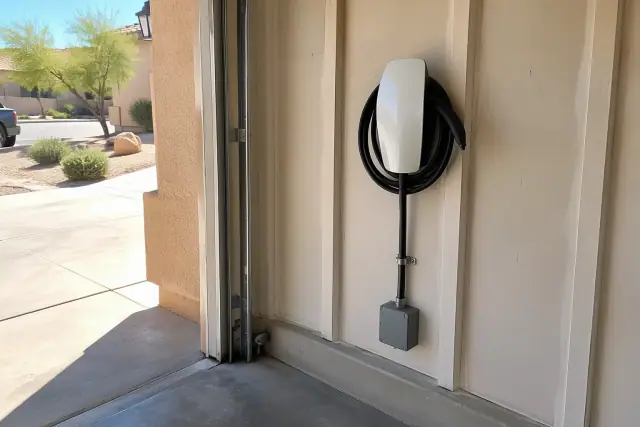
Tesla Wall Connector Installation

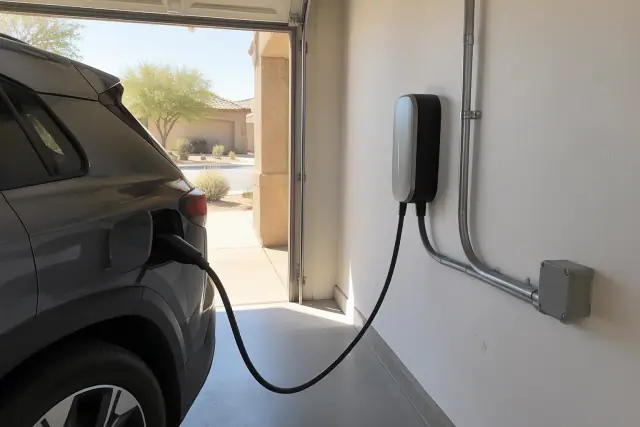
Tesla Wall Connector EV charger installed on a garage wall in Mesa, AZ.

A Tesla Wall Connector can deliver up to 48 amps of continuous output when installed on the dedicated 60-amp circuit needed for full output. We check breaker space and service capacity before selecting the circuit and mounting position.

Request Estimate

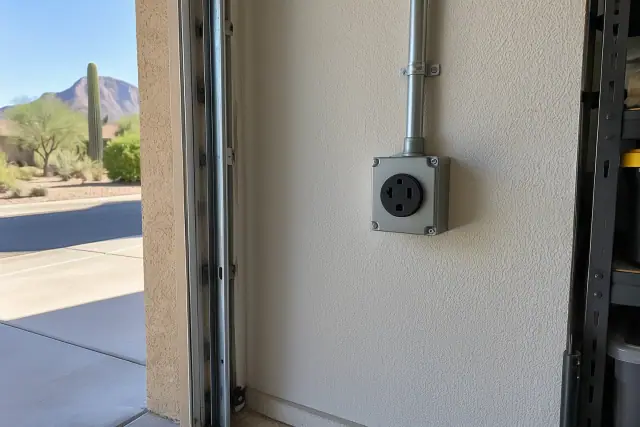
NEMA 14-50 Outlet Installation

NEMA 14-50 EV charger outlet installed on a garage wall in Mesa, AZ.

A NEMA 14-50 outlet supports a compatible portable charger that can be unplugged and relocated. We assess the outlet configuration and dedicated circuit so the connection suits the charger you plan to use.

Request Estimate

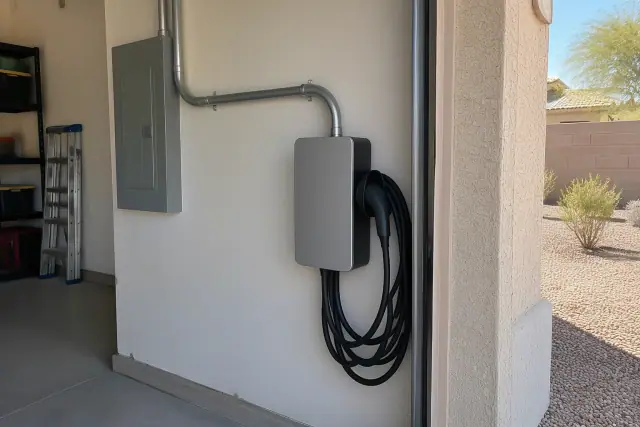
Hardwired & Dedicated Circuit Installation

Contractor photo of hardwired and dedicated circuit installation for an EV charger in a Mesa, AZ garage.

Hardwired installations connect the charging unit directly to its supply wiring. We size the dedicated circuit and conductors to the selected equipment, then plan conduit routing through the stucco or block walls common in Mesa construction.

Request Estimate

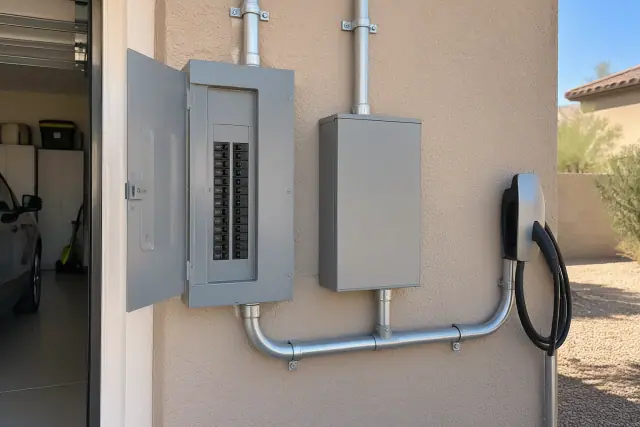
EV Charger Panel Upgrades

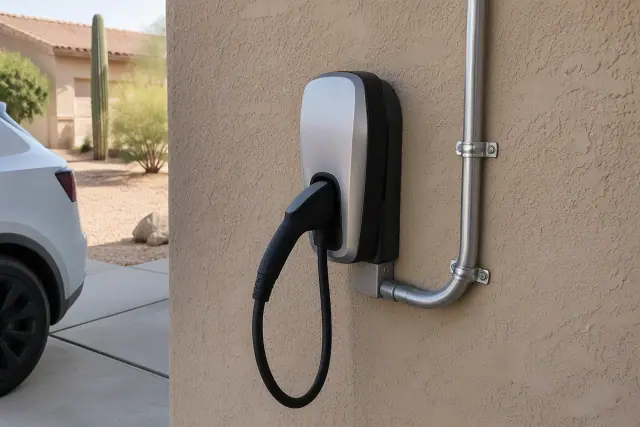
EV charger panel upgrade with heavy conduit and mounting brackets on a stucco wall in Mesa, AZ.

We compare existing electrical demand with the capacity needed for charging before recommending panel work. A subpanel, load management device, or main panel upgrade may be considered, depending on the service capacity and project requirements.

Request Estimate

EV Charger Repair & Troubleshooting

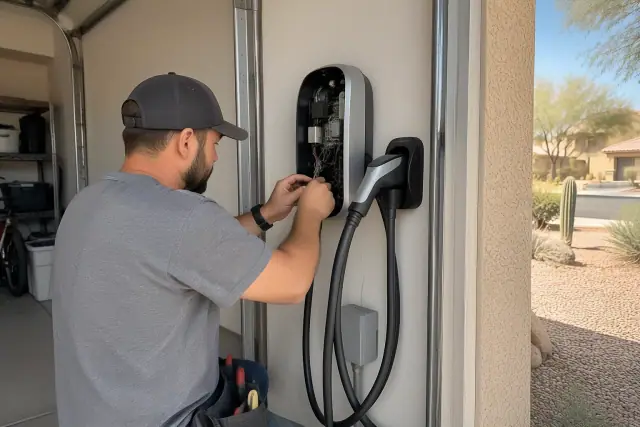
EV charger repair and troubleshooting in a residential garage in Mesa, AZ.

Fault codes, interrupted charging sessions, and repeated trips do not identify the failed part by themselves. We check the circuit, connector contacts, contactor, and firmware before recommending repair or replacement.

Request Estimate
Choose Your Charging Setup

Charging Equipment & Property Options

Equipment selection changes with the vehicle, parking arrangement, and number of users. We compare connection types, available amperage, cable reach, and management features for residential, commercial, fleet, and apartment installations.

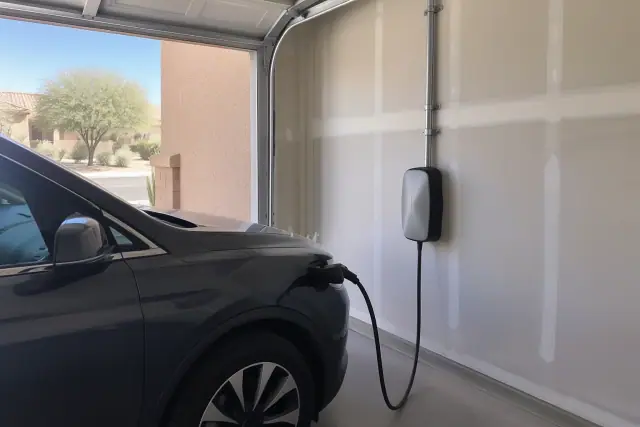
EV charger replacement and upgrade in a residential garage in Mesa, AZ.

Residential Level 2 Charging

Home Level 2 charging uses a dedicated 240-volt supply. Many residential projects involve circuits between 20 and 60 amps, depending on the selected unit and available capacity.

  • Compare charging output with your vehicle's needs
  • Choose cable length for the garage layout
  • Check WiFi and scheduling features
  • Review UL 2231 personnel protection ratings
  • Account for HVAC, pool equipment, and water-heater loads
Request Estimate
Hardwired EV charger installation on a desert-tan stucco home exterior in Mesa, AZ.

Hardwired Charging for Higher Output

Many chargers rated from 48 to 80 amps require a hardwired connection. The selected model's installation requirements and the property's electrical capacity determine the circuit and output setting.

  • Connect equipment directly to its supply wiring
  • Size conductors for the chosen charger
  • Plan the conduit route from the panel
  • Position the unit for vehicle reach
  • Confirm connection torque and operating output
Request Estimate
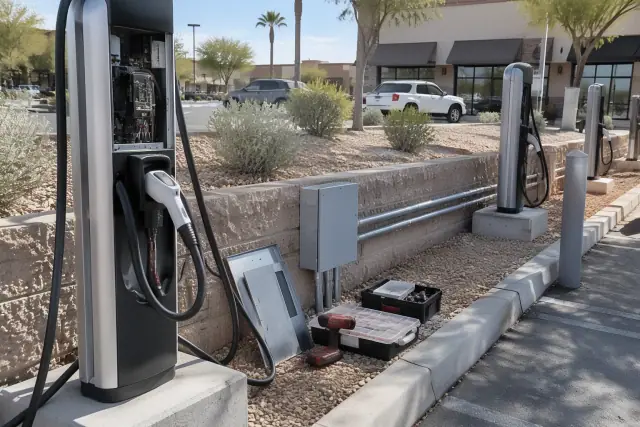
Contractor photo of commercial EV charger installation at a retail strip mall in Mesa, AZ.

Commercial EV Charger Installation

Commercial sites need charging plans that account for larger loads, access, and permitting. Depending on the project, that can include a dedicated transformer or subpanel serving a bank of chargers.

  • Assess the site's available electrical capacity
  • Plan charging access for employees or visitors
  • Evaluate subpanel and transformer needs
  • Address accessibility for public-facing stations
  • Coordinate City of Mesa commercial plan review
Request Estimate
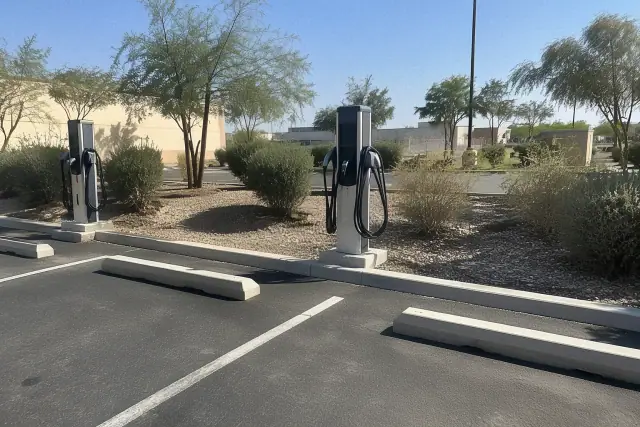
Completed EV charger pedestal installation on an asphalt parking bay in Mesa, AZ.

Fleet EV Charging Station Upgrades

Delivery vans, service trucks, and company sedans put charging equipment through frequent daily use. Fleet layouts can use load management to stagger sessions across stations and keep the charging plan within available service capacity.

  • Plan station placement around vehicle parking
  • Review demand from daily charging cycles
  • Coordinate output across multiple stations
  • Assess electrical demand before adding chargers
  • Allow for future fleet charging expansion
Request Estimate
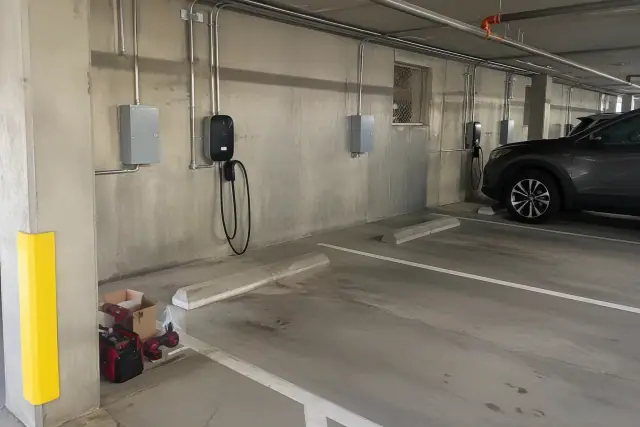
EV charger replacement in an underground parking garage in Mesa, AZ.

Multifamily & Apartment Charging

Apartment projects need decisions about who uses each station and how charging is metered. Our multifamily work includes properties near Fiesta District and Downtown Mesa, with shared capacity sized for simultaneous charging sessions.

  • Compare tenant submetering with shared amenities
  • Plan property-owned charging stations
  • Assess shared circuits and panel capacity
  • Account for simultaneous charging demand
  • Coordinate equipment with the property's layout
Request Estimate
Equipment, Capacity & Cost

Choose the Right Charger Upgrade Approach

A more powerful charger is only useful when the vehicle, circuit, and panel can support it. We help compare equipment features, electrical changes, and the total project cost before you choose an upgrade.

Licensed EV Infrastructure Specialists

Our electricians hold Arizona Registrar of Contractors licensing and manufacturer-specific installer credentials for major charging brands. We carry liability insurance and focus on EV infrastructure, including the wiring and panel assessment behind each installation.

Mesa Permitting & Local Experience

We handle replacement and upgrade permitting through the City of Mesa Building Safety Division. In homes built in the 1970s and 1980s, existing 100-amp service can make capacity planning a key part of the job.

Flat-Rate Pricing After a Site Visit

Your estimate accounts for equipment, labor, panel-to-charger distance, and wiring or conduit changes. Labor typically represents more than half the invoice on straightforward replacements, so we review the full installed scope before quoting a flat rate.

When to Repair or Replace

Charging Problems That Need an Assessment

Slow charging, physical wear, and lost capacity can have different causes. We inspect the equipment and its supply circuit to separate a repairable fault from a replacement need, then explain the work before you commit.

Get a Free Estimate

Declining Charging Speed

If a Level 2 charger that previously delivered 30 amps now runs slowly, a failing contactor, loose termination, or undersized circuit may be involved. Diagnosis helps identify whether the restriction is in the unit or its electrical supply.

Heat-Damaged Housings & Cables

Mesa summer heat can exceed 115 degrees, while pavement temperatures can climb past 150 degrees. Outdoor equipment also faces UV exposure; cracked housings and discolored plastic call for an assessment of the enclosure and cable condition.

Outdated Charging Features

Equipment installed eight to ten years ago may lack WiFi connectivity, load sharing, or the output a newer EV can accept. An upgrade should address the features you need while staying within the capacity of the circuit and panel.

Repeated Breaker Trips

An interrupted session can point to a circuit problem or insufficient capacity alongside major household loads. We examine the charger's supply and the demand from equipment such as air conditioning before recommending electrical changes.

Dust & Corroded Connector Contacts

Desert dust can work into connector contacts, and August monsoon humidity adds another source of wear. We inspect the contacts and enclosure when a charger loses sessions or shows corrosion, then assess whether repair or replacement is appropriate.

Insufficient Capacity for Another EV

Adding a second charger can expose limits in a setup designed for one vehicle. We assess combined demand and discuss load management, circuit changes, or panel work before expanding the charging arrangement.

From Assessment to Charging

Our EV Charger Replacement Process

The process covers the condition of your current setup, the electrical capacity available, and the work needed for the replacement. You receive an equipment recommendation and flat-rate scope before installation begins.

01.

Inspect the Existing Charger

We inspect the charger, cable, connector, and circuit, then review any fault codes or charging interruptions. The findings help determine whether the unit can be repaired or whether replacement is the better fit.

02.

Calculate Available Panel Capacity

We survey existing loads and calculate remaining capacity using NEC Article 220. If capacity is tight, we discuss load management, a subpanel where appropriate, or a service upgrade rather than assuming an added breaker will solve the problem.

03.

Select Equipment & Confirm the Price

We compare amperage, connection type, cable reach, and scheduling features against your vehicle and parking layout. The estimate includes the selected equipment and required electrical work so you know the total before work begins.

04.

Plan the Wiring & Permits

We plan the circuit and conduit route, including access through stucco or block walls where needed. Permitting is coordinated through Mesa, with commercial projects following the applicable plan review process.

05.

Install & Check Connections

We mount the charger for vehicle reach, install the required conductors, and terminate connections to the equipment's torque specifications. Wiring and grounding are addressed as part of the installation, alongside charging-equipment requirements such as UL 2594.

06.

Test Output & Complete Inspection

We test charging output and complete the city inspection process. We also review cable care, scheduling features, and the permit and equipment documentation to keep with your installation records.

Plan Your Charging Upgrade

Request Your EV Charger Replacement Estimate

Tell us whether your charger is failing, charging too slowly, or no longer fits your vehicle. We can assess the unit, circuit, and panel during a site visit and provide a free estimate for the replacement or upgrade.

Replacement & Upgrade Questions

EV Charger Replacement & Upgrade FAQs

Find answers about replacement costs, panel capacity, connection types, maintenance, and charging for different properties. Your existing electrical setup and equipment choice determine the final scope.

Discuss Your Charger

EV charger installation and replacement in Mesa typically runs from $780 to $3,910, with an average around $1,760 total, including roughly $970 in labor and $790 in materials. Simpler swaps using suitable existing 240-volt circuits often range from $450 to $1,730. New conductors, circuit changes, relocation, or panel work can increase the cost. We provide a free estimate and flat-rate quote after a site visit.

A main panel upgrade in Mesa generally ranges from $1,800 to $4,500, often for a move from 100-amp to 200-amp service. The scope can expand if the meter socket or service entrance conductors also need replacement. Older Federal Pacific or Zinsco panels may call for full replacement, so we assess the panel and existing loads before quoting the work.

Under current IRS guidance, the federal Alternative Fuel Vehicle Refueling Property Credit, Section 30C, does not apply to equipment placed in service after June 30, 2026. Equipment placed in service by that date may qualify if the location and other eligibility requirements are met. Confirm your installation date and eligibility with a tax professional; Mesa EV Chargers can provide equipment and installation documentation.

Replacing a plug-in unit is different from changing a dedicated circuit or hardwired connection. Hardwired work involves conductor sizing, grounding, connection torque, and permitting considerations that should be reviewed by a licensed electrician. Our service checks the existing electrical setup as well as the charger, so a replacement does not leave an underlying circuit problem unresolved.

Not always; available capacity depends on the panel rating and the demand from HVAC, water heating, and other major loads. Many homes with 200-amp service can accommodate a Level 2 circuit without a panel upgrade. Homes with 100-amp service, including older Mesa properties built before the 1990s, more often need a closer look at capacity or load management. A load calculation determines which changes are necessary.

Manufacturer parts warranties typically range from one to several years, depending on the brand and unit. Equipment warranty terms and installation workmanship terms should be reviewed separately before work begins. Confirm what is covered, how long each term lasts, and how to request service, then retain the invoice and permit documentation.

Residential projects typically serve one or two Level 2 chargers for personal vehicles. Commercial and fleet projects involve larger combined loads, station management, and possible subpanel or transformer work. Public-facing stations also require accessibility planning, while apartment projects add decisions about tenant submetering or shared amenity billing.

A NEMA 14-50 setup allows a compatible portable charger to be unplugged and relocated. Hardwired equipment connects directly to the supply wiring and is used for many higher-output units. We compare your charger's requirements, parking layout, and available capacity before recommending the connection type.

Compatible WiFi-enabled chargers can schedule sessions around off-peak periods. We can discuss scheduling for an applicable SRP or City of Mesa Electric Vehicle Time of Use rate plan. Confirm the current hours and rate details for your own electricity account before setting the schedule.

Periodically inspect the cable, connector, and housing for visible wear. A professional check every couple of years is recommended, especially for outdoor units exposed to dust and summer heat. Corrosion, cracked plastic, recurring faults, or new charging interruptions are reasons to arrange an assessment sooner.

Yes, we can assess circuit and panel capacity with another EV, solar, or battery storage plans in mind. That discussion can include load sharing and the demand from simultaneous charging. Planning the expected loads helps identify electrical work before more equipment is added.

Same-day service may be available for straightforward replacements and time-sensitive fleet or commercial charging problems. The equipment needed and any circuit or panel changes affect the scope. Call with the charger's symptoms and property details so we can discuss the work and available scheduling.

Whole-home surge protection can be discussed during a panel assessment, particularly with monsoon-season electrical spikes in mind. We review whether it makes sense alongside the planned electrical work and sensitive charger electronics. It is considered as part of the property's broader electrical setup.