Proudly serving Mesa, Gilbert, Chandler, Tempe, Queen Creek, Scottsdale & surrounding areasCall or Text 24/7: 602-559-1623
Aerial drone photo of residential neighborhoods and desert vegetation in Mesa, AZ.

Commercial EV Charger Installation in Mesa, AZ for Level 2 Stations & Fleet Charging Infrastructure

Mesa EV Chargers provides commercial EV charger installation for businesses and multifamily properties in Mesa, AZ. We install Level 2 chargers, Tesla Wall Connectors, and fleet charging stations around your parking layout and electrical capacity. Our work also includes dedicated circuits, panel upgrades, and EV charger repair so your equipment and its power supply work together.

Mesa's heat and long parking-lot conduit runs make electrical planning essential before equipment is ordered. We review the service load, conductor sizing, and charger locations during a property walk. Permitting and City of Mesa inspection are part of our installation process. Contact us to discuss your charging needs and get a quote based on the site.

From employee parking to delivery depots, we match charging equipment to vehicle dwell time and daily use. A clear scope identifies the panel, trenching, and utility work your project needs.

Mesa EV Chargers provides commercial EV charger installation in Mesa and nearby Tempe, Chandler, Gilbert, Queen Creek, and Apache Junction.

★ ★ ★ ★ ★4.9/5 Customer Rating · 19 Years of Electrical Experience · 2,000+ Charging Projects Completed · Licensed, Bonded & Insured · Serving Homes, Fleets & Businesses

Commercial EV Charging Options & Benefits

What Does Commercial EV Charger Installation Include?

Commercial installation connects charging hardware to the electrical infrastructure your property can support. The scope can range from a single Level 2 unit in a retail lot to a fleet depot using three-phase power, with panel capacity, conduit routes, and parking access considered together.

Mesa has over 504,258 residents, and properties from the Fiesta District to Eastmark serve employees, shoppers, and fleet drivers with different charging needs. Workplace stations can use longer parking windows, while delivery operations may need faster vehicle turnaround.

We plan for the ports you need now and the capacity you may add later. If your business expects to add four ports, allowing for that capacity during the initial conduit and panel work can avoid repeating parts of the installation.

Benefits of Charging That Fits Your Property

A useful charging installation starts with how people park and how vehicles are used. Equipment, access, and expansion choices should support the daily operation of your property.

  • Offer charging during employee work hours.
  • Give retail customers a place to charge while they visit.
  • Support overnight charging for returning fleet vehicles.
  • Provide shared or dedicated charging for apartment residents.
  • Use access controls to manage who can charge.
  • Choose metering and billing options for energy cost recovery.
  • Share trenching and conduit work across multiple ports.
  • Prepare electrical capacity for phased expansion.
Equipment and Electrical Work

Commercial EV Charger Installation Services

We install charging equipment and the electrical infrastructure behind it. Each project starts with the vehicles, parking patterns, and available service capacity so the final scope addresses how your business will use its chargers.

Level 2 Charging Station Installation

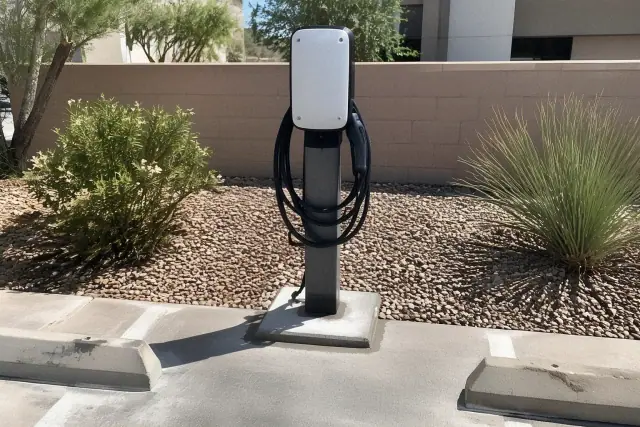
Level 2 EV charging station installed in a paved employee parking lot in Mesa, AZ.

Level 2 equipment operates at 208-240V and delivers roughly 12 to 80 amps depending on the unit. It suits an 8-hour workday or overnight parking window, giving office, retail, and multifamily properties a practical charging option matched to longer stays.

Request Estimate

Tesla Wall Connector Installation

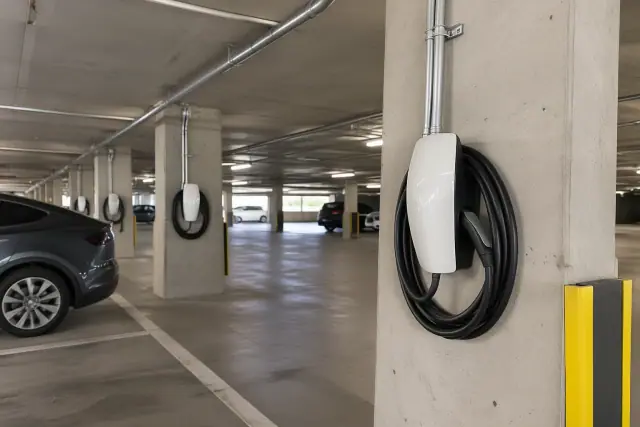
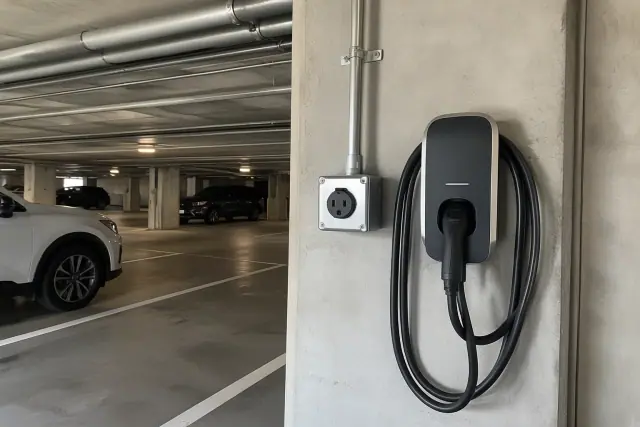
Tesla Wall Connector installation on a concrete pillar in a Mesa, AZ underground parking garage.

We install Tesla Wall Connectors for fleet vehicles and employee or customer parking. Where appropriate, load-sharing configurations let multiple Wall Connectors distribute available charging capacity, with the electrical design matched to the equipment and service.

Request Estimate

DC Fast Charging and Fleet Infrastructure

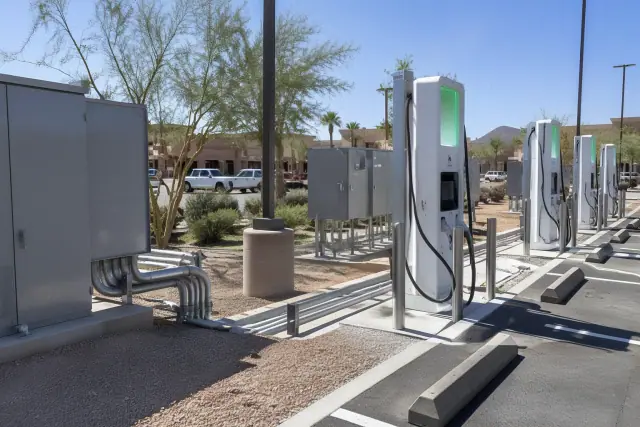
Commercial EV charger installation with heavy conduit in a Mesa, AZ parking lot.

DC fast charging supplies power directly to the vehicle battery and can bring a vehicle from roughly 20 to 80 percent state of charge in 30 to 45 minutes. We assess transformer capacity, switchgear, and utility coordination with Arizona Public Service or Salt River Project according to the service territory.

Request Estimate

Hardwired Chargers and Dedicated Circuits

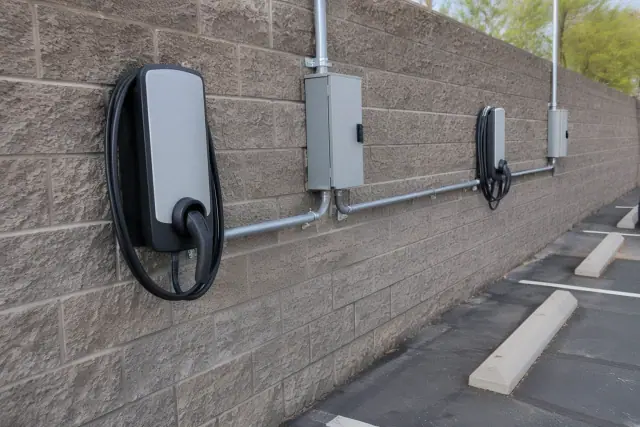
Commercial EV chargers and conduit installed on a block wall in Mesa, AZ.

Hardwired installation removes the plug connection point and suits equipment used through daily or multiple shifts. We also install 240V circuits for plug-in chargers, sizing conductors and breakers for the specified continuous load and keeping unrelated loads off charging circuits.

Request Estimate

Panel and Service Capacity Upgrades

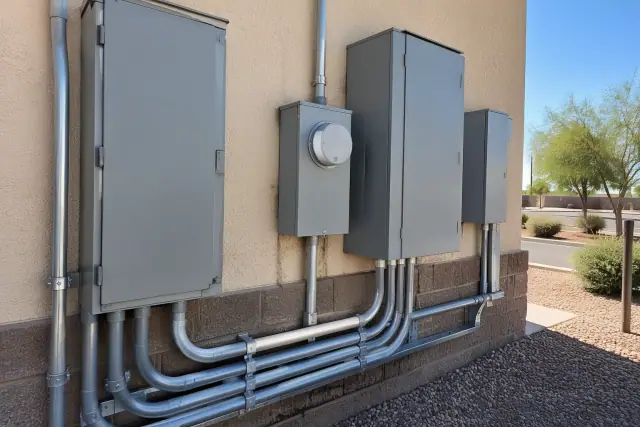
Electrician's photo of commercial EV charger panel upgrades in Mesa, AZ, showing metal conduits and breaker boxes.

We calculate existing demand and proposed charging load to determine whether your 100, 200, or 400-amp service has room. Panel upgrades, dedicated feeders, and switchgear work are recommended according to the load calculation and the needs of future ports.

Request Estimate

EV Charger Repair and Replacement

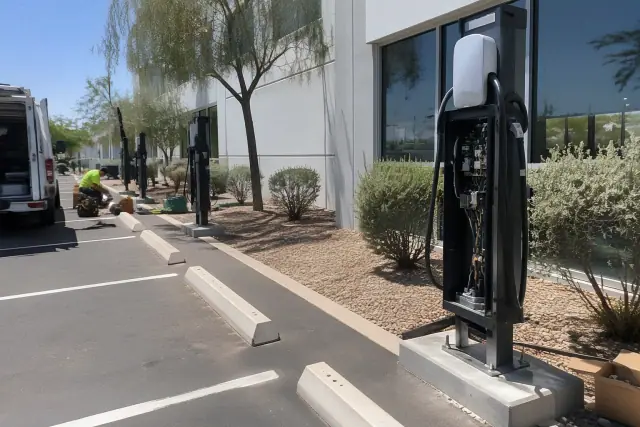
EV charger repair and replacement in Mesa, AZ, showing fresh mounting grout and an unpowered faceplate.

We troubleshoot breaker trips, failed charging sessions, and network errors to identify whether the problem is in the EVSE, circuit, vehicle, or connection. When repair cost or hardware limitations make replacement more practical, we match the new charger to the existing circuit or include the necessary circuit upgrade.

Request Estimate
Match Charging to Daily Use

Charging Choices for Commercial Properties

Charger selection depends on who parks at the site, how long vehicles stay, and how charging costs will be handled. These options pair equipment and access decisions with the needs of each property.

Contractor photo of commercial EV charger installation at an office in Mesa, AZ.

Workplace and Office Charging

Office charging supports employees while their vehicles are parked during work. We plan circuits around current demand and leave a path for expansion as more employees switch to EVs.

  • Match output to employee parking duration.
  • Locate chargers around the office parking layout.
  • Review available electrical service capacity.
  • Choose employee access controls where needed.
  • Plan additional ports in phases.
Request Estimate
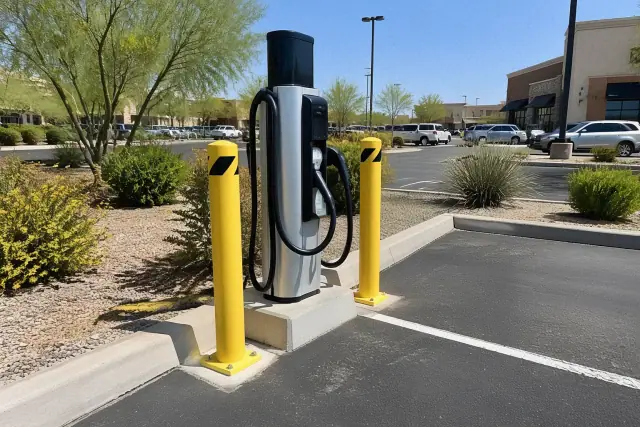
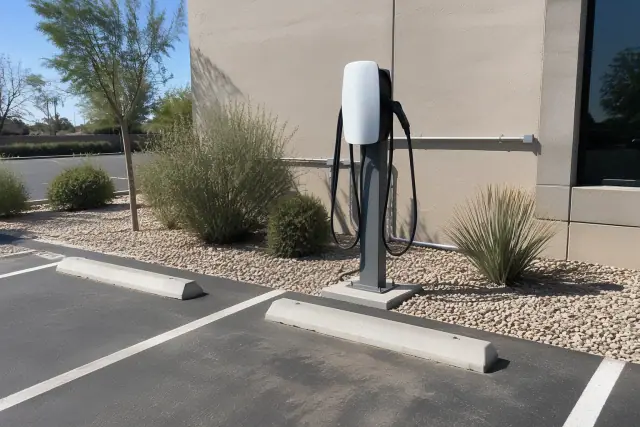
Commercial EV charger installation with a charging pedestal and concrete bollards at a Mesa, AZ strip-mall parking lot.

Retail and Customer Charging

Retail charging works best when equipment and placement suit customer visits and peak parking hours. Networked stations can support access, payment, and usage reporting according to the property owner's requirements.

  • Size charging around customer dwell time.
  • Review parking demand during busy hours.
  • Place equipment within practical cable reach.
  • Choose customer payment or amenity access.
  • Consider networked charging loyalty programs.
Request Estimate
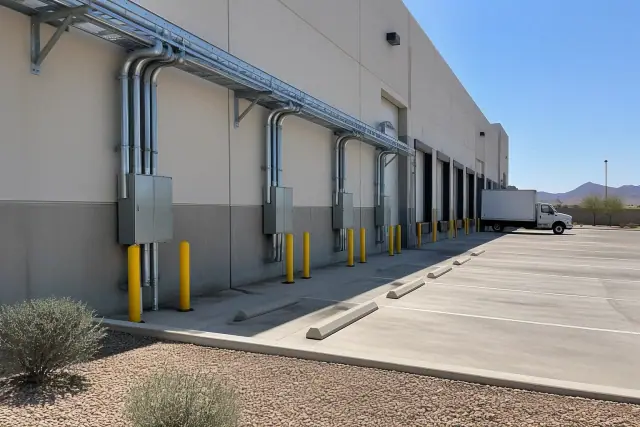
Commercial EV charger cable trays and conduit installed at an industrial warehouse bay in Mesa, AZ.

Fleet and Depot Charging

Fleet charging starts with vehicle duty cycles, depot layout, and the time available between trips. We sequence charging around return times and service capacity, with conduit provisions for future vehicles.

  • Review daily vehicle duty cycles.
  • Match charging speed to turnaround needs.
  • Coordinate overnight charging schedules.
  • Evaluate utility and transformer capacity.
  • Allow conduit space for fleet expansion.
Request Estimate
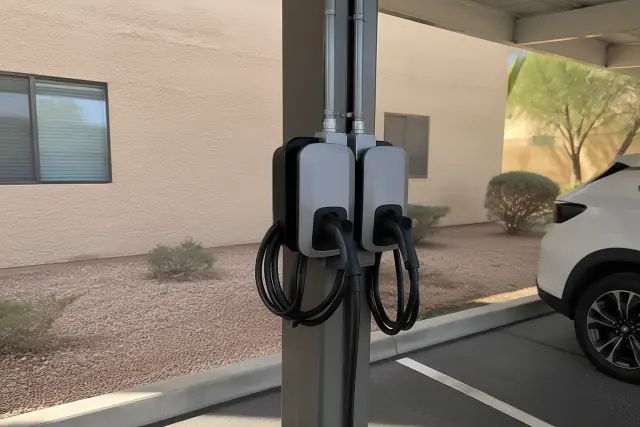
Dual-port EV charger installed on a steel post at an apartment complex in Mesa, AZ.

Apartment and Multifamily Charging

We install shared and dedicated charging for apartment properties, including communities around Dobson Ranch and Eastmark. Metering and access choices help property managers decide how charging will fit their tenant amenities.

  • Offer shared chargers in common parking areas.
  • Consider dedicated units with individual metering.
  • Choose Tesla or universal Level 2 equipment.
  • Set tenant access and billing preferences.
  • Add ports as resident demand grows.
Request Estimate
NEMA 14-50 and plug-in EV charger installation with overhead conduit in a Mesa, AZ underground parking garage.

NEMA 14-50 and Plug-In Charging

A NEMA 14-50 outlet allows compatible portable EVSE or plug-in Level 2 equipment to be used at the property. A straightforward Arizona installation typically costs $800 to $1,900, depending on panel distance and available breaker space.

  • Match the outlet to the selected EVSE.
  • Review the charger's continuous load rating.
  • Check panel capacity and breaker space.
  • Plan the conduit route to the parking position.
  • Consider plug-in access for maintenance flexibility.
Request Estimate
Plan Before Buying Equipment

Choose an Installer Who Plans the Full Project

The charger is only part of a commercial installation. Ask how your contractor evaluates electrical loads, handles Mesa permits, and accounts for the parking layout before you commit to equipment.

Load Calculations Before Equipment Selection

We assess existing demand and proposed EV charging load using NEC Articles 220 and 625, including NEC 220.87 where applicable. That evaluation determines whether the existing service can support the project and which upgrades belong in the scope.

Electrical Planning for Mesa Heat

Summer ground and conduit temperatures affect conductor capacity. We account for temperature derating and conduit conditions when sizing the installation, so the electrical design reflects Mesa's climate as well as the charger's specifications.

Quotes Based on a Property Walk

We review panel access, conduit distance, parking layout, and charger count before quoting. The resulting scope identifies the electrical work involved and helps you compare a complete installation with a hardware-only price.

Plan for Reliable Daily Charging

Why Choose Us for Commercial Charger Installation?

We are a veteran-owned electrical EV charger contractor licensed under Arizona Registrar of Contractors requirements. Our work includes permitting, load calculations, and inspection coordination, with attention to the capacity, routing, and equipment issues that can interrupt commercial charging.

Request a Site Assessment

Limited Capacity in Older Panels

Commercial buildings built before the 1990s may have little room for added charging load. We evaluate existing demand, service size, and breaker space before recommending whether panel work is necessary.

Long Conduit Runs and Trenching

Parking spaces far from the electrical panel can require underground cable routes or overhead conduit across the lot. We measure the route and account for shared infrastructure so distance and excavation are included in the installation scope.

Breaker Trips and Failed Charging

A charger that repeatedly trips a breaker or will not start a session needs a diagnosis of both the equipment and its power supply. We check the EVSE, circuit, and vehicle connection against manufacturer specifications before recommending a repair.

Network and Access Problems

Network errors can interfere with sessions, access controls, and billing on connected chargers. We investigate the connection and equipment requirements so property managers can distinguish a network issue from an electrical fault.

Awkward Charger Placement

Cable reach, parking geometry, and accessible routes all affect whether drivers can use a charger comfortably. We review mounting position and the path to the equipment to avoid a layout that requires cords to stretch across walkways.

Insufficient Capacity for More Ports

A growing fleet or apartment community may need additional chargers after the first installation. We consider feeder and conduit capacity early so expansion does not automatically mean repeating trenching throughout the property.

From Property Walk to Inspection

Our Commercial Charging Installation Process

We move from site assessment to electrical design, permitting, and installation with a scope based on your property. Each stage addresses a decision that affects charger placement, project cost, or readiness for inspection.

01.

Review Vehicles and Parking Needs

We begin with who will use the chargers, how long vehicles stay, and how the parking area operates. Employee shifts, retail visits, and fleet return times help establish the appropriate charging approach.

02.

Assess the Electrical Service

We review the panel, existing demand, and proposed charging load. Conductor and breaker sizing accounts for the applicable 125 percent continuous-load factor, while the service assessment determines whether an upgrade is needed.

03.

Plan Charger Locations and Routes

We measure conduit runs and review parking geometry, accessible space dimensions, mounting height, and cable reach. Equipment locations are planned around practical use, electrical clearances, and the route between parking and the chargers.

04.

Confirm Scope and Installation Cost

Commercial Level 2 stations typically cost $3,000 to $12,000 per port installed. DC fast charging commonly costs $80,000 to $250,000 or more per unit installed, with transformer, switchgear, and utility work affecting the total. We quote the project after reviewing panel distance, conduit routes, port count, and required upgrades.

05.

Handle Permits and Utility Coordination

We pull permits through City of Mesa Development Services and coordinate utility service upgrades when required. The design addresses applicable NEC and NFPA 70 provisions for conductors, disconnects, and GFCI protection.

06.

Install Equipment and Coordinate Inspection

Once permits clear, most single or dual-port commercial installations require 4 to 10 hours of on-site labor. We install the scoped equipment and electrical work and coordinate City of Mesa inspection; permit and utility scheduling are separate from that labor window.

Discuss Your Property

Schedule a Commercial EV Charging Consultation

Tell Mesa EV Chargers about your property, vehicle needs, and proposed charger count. We can walk the site, review the electrical service, and provide a quote before you commit to equipment.

Costs, Planning, and Support

Commercial EV Charger Installation FAQs

These answers cover commercial installation costs, equipment choices, site requirements, and ongoing charger support. A property assessment establishes the scope for your parking area and electrical service.

Discuss Your Project

Commercial Level 2 installation typically runs $3,000 to $12,000 per port, while DC fast charging commonly runs $80,000 to $250,000 or more per unit installed. Conduit distance, trenching, panel capacity, and utility work affect the total. A site walk lets us quote the required scope, and multiple ports can share some trenching, conduit, and panel costs.

Residential and small commercial installations in Arizona typically fall between $750 and $2,500, depending on the scope. Panel distance, conduit length, and the need for a capacity upgrade can raise the cost. We assess the property before quoting, including whether an older Downtown Mesa building needs panel work.

The property owner may use a flat rate, a per-kWh price, or offer charging as an amenity, so there is no single charging price. Typical EV efficiency of roughly 2.5 to 5 miles per kWh can help estimate energy use, while the electricity rate determines energy cost. We can discuss metering and networked billing if you want to recover those costs from users.

A Mesa commercial project requires an electrical service assessment, permitting through City of Mesa Development Services, and installation by a licensed contractor. NEC Article 625 and applicable NFPA 70 provisions address the charging equipment and electrical work. Public sites also need their parking spaces, mounting positions, and accessible routes reviewed for ADA requirements.

The 80/20 rule is common daily-use guidance to charge to about 80 percent and avoid regularly dropping below 20 percent. DC fast charging slows considerably past the upper end of that window, so the target affects fleet turnaround planning. Charging targets should be considered alongside the vehicle's needs and available parking time.

There is no single national distance that fits every installation. Placement depends on electrical clearances, local fire code requirements, manufacturer specifications, and cable reach. We also consider vehicle parking geometry and walkways so charger placement is practical for drivers.

Yes, we install shared chargers in common parking areas and dedicated units with individual metering options. Property managers can choose how access and charging charges fit their amenities, including per-session billing or inclusion in amenity fees. Planning for likely demand over the next five years helps identify where future ports and conduit capacity may be needed.

We install and service Level 2 and DC fast charging equipment, including Tesla Wall Connectors for appropriate fleet, workplace, and multifamily applications. Equipment selection depends on the vehicles, charging window, networked billing needs, and hardware budget. We also compare hardwired and pedestal-mounted options against the way your property operates.

We offer same-day installation service and quick scheduling for straightforward retrofits with adequate panel capacity. Eligibility depends on the scope and permit clearance. Projects involving utility service changes, extensive routing, or multiple installation stages need a schedule based on that work.

Not necessarily; the load calculation determines whether the existing service can support the proposed chargers. We assess demand, breaker space, and service capacity before recommending an upgrade. Fleet depots and larger multi-port sites may also require switchgear, transformer coordination, or dedicated feeders.

Yes, we can phase in ports as employee, tenant, or fleet demand grows. Planning conduit and electrical capacity at the start helps limit repeated excavation or panel work. The expansion plan should account for both the future charger count and the capacity available from the utility.

Hardwired equipment removes a plug connection point and suits daily or multiple-shift commercial use. A compatible plug-in charger can offer maintenance flexibility, with a NEMA 14-50 outlet as one option. The decision depends on the selected equipment, continuous load, and property requirements.

Yes, we provide EV charger repair and troubleshooting, including 24/7 service for businesses and fleet operators. We investigate the EVSE, circuit, vehicle, and network connection to identify the cause. If repair costs approach replacement cost or older hardware cannot meet charging needs, we discuss replacement and any required circuit changes.