Proudly serving Mesa, Gilbert, Chandler, Tempe, Queen Creek, Scottsdale & surrounding areasCall or Text 24/7: 602-559-1623
Aerial drone photo of residential neighborhoods and desert vegetation in Mesa, AZ.

EV Charger Installation in Fountain Hills, AZ for Level 2 Systems & Outlets

Mesa EV Chargers installs Tesla Wall Connectors, NEMA 14-50 outlets, and hardwired EV chargers in Fountain Hills, AZ. We provide dedicated charging circuits, panel upgrades, and Level 2 charging for homes and businesses. Commercial properties, fleets, and multifamily communities can arrange charging installations suited to their parking and electrical capacity. We also repair, troubleshoot, replace, and upgrade existing chargers.

Fountain Hills homes face summer heat, monsoon moisture, and electrical panels already serving air conditioning and pool equipment. A charger adds a sustained load that needs to be evaluated before installation. We inspect the panel, measure the route to your parking space, and explain any electrical work in a written scope. A free EV charger consultation gives you a clear starting point for the project.

From Eagle Mountain and FireRock Country Club to homes near Fountain Park and Adero Canyon, charger placement needs to fit the property. We consider garage access, stucco and block walls, outdoor exposure, and HOA architectural requirements when planning the work.

★ ★ ★ ★ ★4.9/5 Customer Rating - 19 Years of Electrical Experience - 2,000+ Charging Projects Completed - Licensed, Bonded & Insured - Serving Homes, Fleets & Businesses
Installation Services

EV Charger Services in Fountain Hills, AZ

Choose charging equipment around your vehicle, daily driving, and the power available at the property. Our services cover new installations, electrical capacity work, and diagnostics for chargers already in use. The same site assessment helps identify whether you need a simple garage connection or a larger commercial charging project.

Tesla Wall Connector Installation

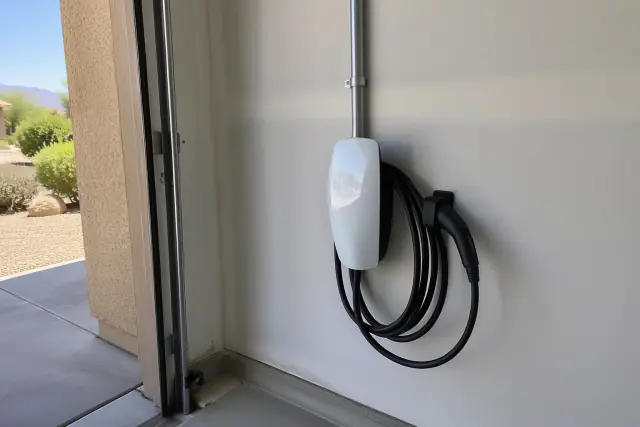
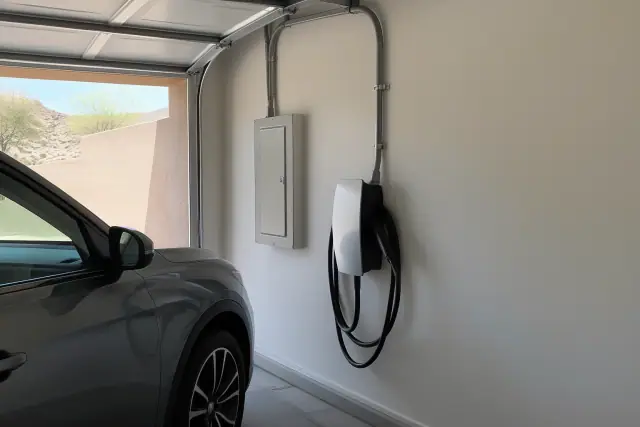
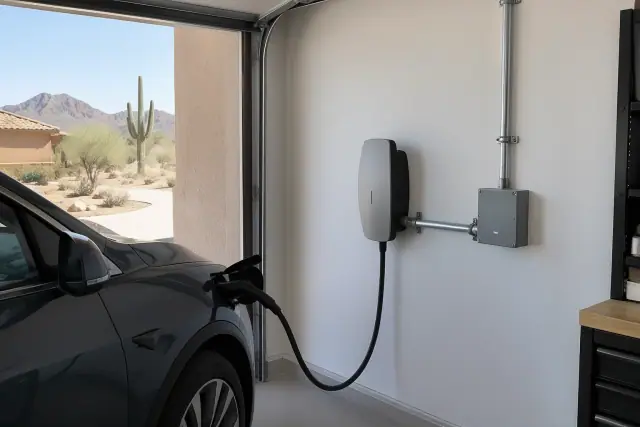
Tesla Wall Connector EV charger installed on an interior wall in Fountain Hills, AZ.

We mount Tesla Wall Connectors in garages, on exterior stucco, and at detached casitas. A properly sized 60-amp dedicated circuit supports up to 48 amps of continuous output, with the actual charge rate limited by the vehicle and available power. Panel evaluation, mounting, and circuit work are planned together. Explore Service

Explore Service

NEMA 14-50 Outlet Installation

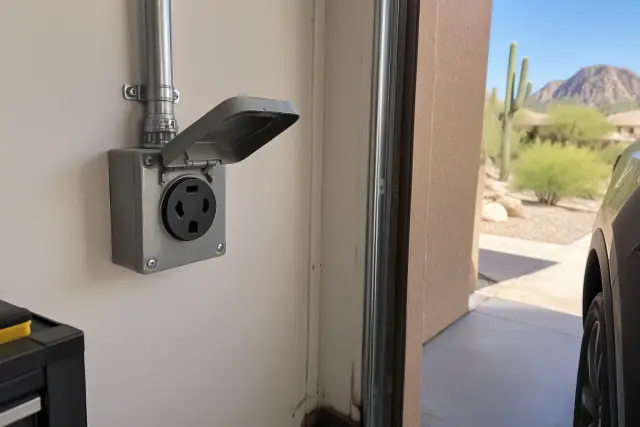
NEMA 14-50 outlet installation on a drywalled wall in Fountain Hills, AZ.

A NEMA 14-50 receptacle supports compatible portable EV charging cables when the outlet, circuit, and equipment are correctly matched. We review the charger's continuous draw and panel capacity before installing the receptacle. A short run from an already-capable panel can make this a practical plug-in option. Explore Service

Explore Service

Commercial EV Charger Installation

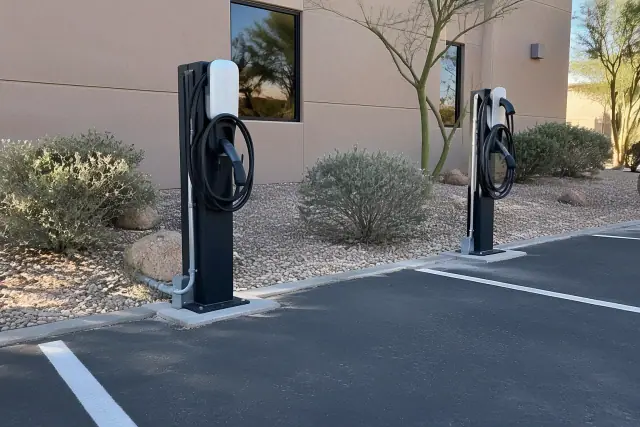
Heavy-duty pedestal commercial EV charger installation outdoors in Fountain Hills, AZ.

Retail centers, medical offices, and HOA common areas need charging suited to the site's electrical service and parking use. We install Level 2 and DC fast charging equipment, with metering considered where tenant billing is required. Equipment selection and power requirements are established before installation. Explore Service

Explore Service

EV Charger Repair & Troubleshooting

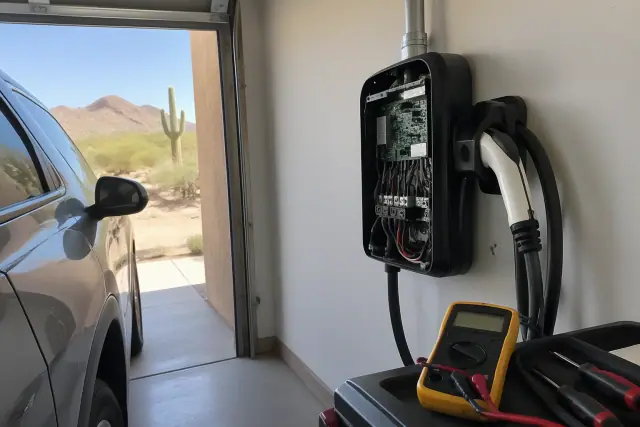
EV charger repair and troubleshooting in Fountain Hills, AZ, showing an open wall-mounted unit and a multimeter.

Fault lights, interrupted sessions, and recurring breaker trips need a diagnosis that covers both the charger and its supply circuit. We check internal electronics, connections, and communication with the vehicle's charge port. Repair work can address worn charge handles, failed GFCI protection, and moisture-related corrosion where the equipment is repairable.

EV Charger Panel Upgrades

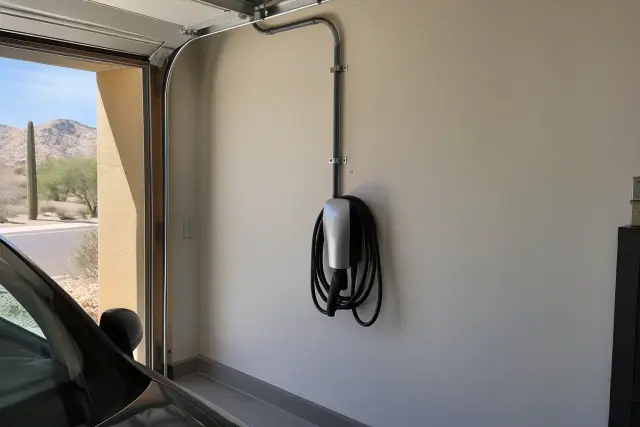
EV charger installation with clean conduit runs on a garage wall in Fountain Hills, AZ.

An older panel may have little capacity left after HVAC, pool pumps, and other household loads. Where the load calculation supports it, upgrading from a 100-amp panel to a 200-amp panel can make room for EV charging. We also assess whether the meter or service supply needs attention before defining the project.

EV Charger Dedicated Circuit Installation

EV charger dedicated circuit installation on a drywall wall in Fountain Hills, AZ.

We install a dedicated EV charging circuit back to the panel, separate from pool equipment and shop tools. The design considers the charger's continuous load, breaker rating, conductor sizing, and the route to the parking space. This gives the charging installation a defined electrical supply without relying on an unrelated shared circuit.

Hardwired EV Charger Installation

Hardwired EV charger installation on a drywall wall in a Fountain Hills, AZ garage.

A hardwired charger removes the plug-and-receptacle connection from the installation. Depending on the manufacturer's specifications, it may support a higher charging current than a plug-in configuration. We coordinate the fixed connection, mounting location, and circuit capacity so the equipment fits the property and vehicle.

Fleet EV Charging Station Installation

Fleet EV charging station installation with heavy-duty metal mounting brackets in Fountain Hills, AZ.

Fleet charging needs to account for how delivery vans and service vehicles return to base. We plan multiple charge points with load management to stagger electrical demand across the available service. The installation can then support charging schedules without assuming every vehicle must draw maximum power at the same time.

Multifamily & Apartment EV Charger Installation

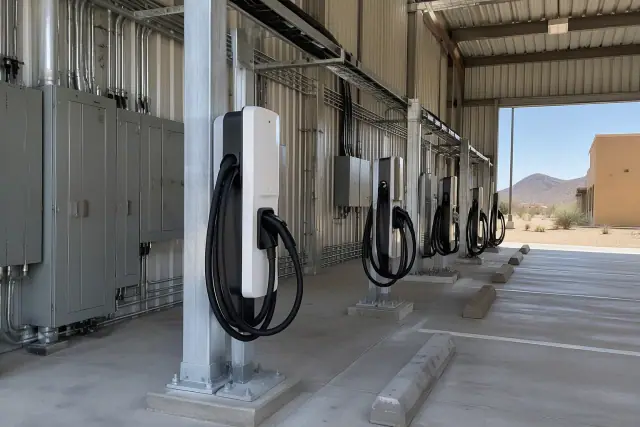
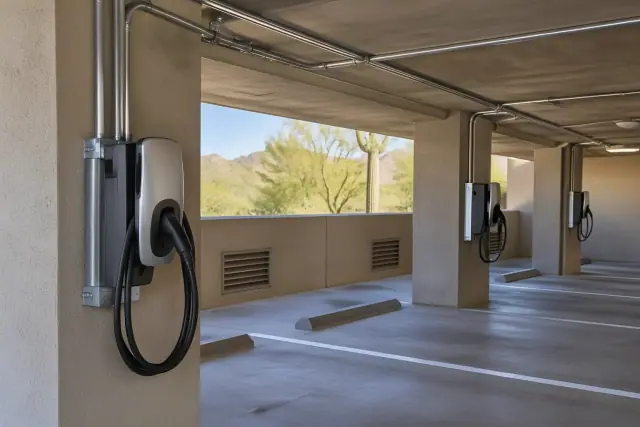
EV charger installation on concrete pillars with overhead conduit in Fountain Hills, AZ.

Condo associations and apartment properties need shared infrastructure that works with assigned spaces, common parking, and resident billing. We coordinate conduit routes and installation access with property managers and HOA boards. Networked stations and individual usage tracking help owners allocate charging use to the appropriate residents.

EV Charger Replacement & Upgrades

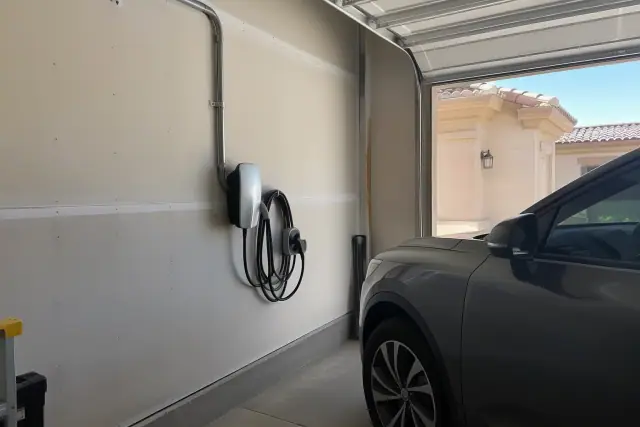
EV charger replacement and upgrade with conduit on a garage wall in Fountain Hills, AZ.

Replacement starts with checking the existing charger's condition and whether its circuit can support the new unit. Moving from a Gen 2 to a Gen 3 Wall Connector, or from a 32-amp charger to a 48-amp unit, requires a capacity review before hardware changes. We reuse existing circuits only where their condition, rating, and applicable requirements allow.

Service Selection

How to Plan Your EV Charger Installation

The right setup balances charging needs with the condition of your electrical service and the route to the vehicle. These checks help define the scope before equipment is mounted or a circuit is installed. They also make it easier to compare proposals for the same work.

Match the Charger to Your Vehicle

A 240-volt Level 2 installation must match the vehicle's onboard charger and the site's capacity. Equipment configurations can range from 10-60 amps, depending on the charger, vehicle, and available power. We establish the appropriate output during the site assessment rather than assuming the highest setting is suitable.

Check Available Panel Capacity

Homes built in the 1970s through 1990s may still have 100-amp or 125-amp panels. Adding a proposed 40-60 amp charging load alongside HVAC, pool pumps, and irrigation controls calls for a load calculation. The result helps establish whether the existing service is suitable or capacity work belongs in the scope.

Plan the Conduit Route

The shortest distance on a floor plan is not always the practical route through stucco, block walls, or a detached garage. We review panel access, wall construction, and the final parking position before choosing the conduit path. Routing preferences are discussed before work begins.

Choose Indoor or Outdoor Placement

Garage walls, exterior stucco, and detached casitas present different mounting and exposure conditions. Outdoor work needs weatherproofing suited to monsoon moisture, while all locations need suitable cable access to the vehicle. We assess these details alongside the manufacturer's installation requirements.

Coordinate Shared Parking

Multifamily and commercial installations need decisions about charger access, metering, and parking use before equipment is ordered. HOA boards and property managers can help define which spaces are served and how usage should be tracked. Those choices shape the conduit layout and station selection.

Compare the Written Scope

A useful proposal identifies the charger location, circuit size, breaker rating, and any panel work. It should also explain permit handling, inspection coordination, and testing. We provide a firm written quote after assessing the property so the scope reflects the actual installation.

Fountain Hills Charging Issues

Common EV Charging Problems

A charging interruption may originate at the panel, along the circuit, inside the station, or at the vehicle connection. Fountain Hills heat and monsoon exposure add wear that deserves attention during diagnosis. We trace the problem before recommending repair, replacement, or electrical upgrades.

Request Charger Troubleshooting

Breakers That Keep Tripping

A charger sharing loads with pool equipment or shop tools can contribute to recurring trips. Limited panel capacity and circuit faults also need to be considered. We check the supply arrangement and charging demand so the recommendation addresses the cause of the interruption.

Heat-Worn Cables and Connections

Summer surface temperatures on driveways and garage walls can climb past 140 degrees, adding stress to exposed equipment. Cable jacketing, connectors, and contactors can show wear over time. Inspection also considers loose connections and manufacturer torque requirements when investigating overheating at a charger.

Moisture Inside Outdoor Equipment

July and August monsoon conditions can expose outdoor connections to moisture and corrosion. Faults may involve damaged seals, compromised weatherproofing, or GFCI protection. We inspect the equipment and its supply circuit to identify the source of the fault before defining repairs.

Slow Charging on Long Runs

A detached garage or distant parking space can require a conduit run of 50 feet or more. Voltage drop and conductor sizing become important parts of that design. We evaluate the run alongside vehicle limits and charger settings when investigating a charge rate below expectations.

Fault Lights or Failed Charge Sessions

A station that lights up but will not begin charging can have a circuit, equipment, or communication problem. Diagnostics include the charger's electronics and interaction with the vehicle's charge port. Identifying which part of the charging path has failed helps avoid an unnecessary hardware swap.

Aging Equipment That Needs Replacement

Daily outdoor exposure can make replacement worth evaluating after 8-10 years, although condition matters more than age alone. Worn handles, damaged cables, and repeated faults can change the repair decision. We assess the unit and existing circuit before recommending a replacement or higher-output charger.

Why Choose Us

Why Choose Mesa EV Chargers in Fountain Hills, AZ

Our work covers residential, multifamily, fleet, and commercial charging across Fountain Hills and the East Valley. We bring the panel assessment, charger installation, and permit coordination into one project scope. That keeps the equipment choice connected to the electrical work the property actually needs.

Tesla Installation Experience

As a Tesla-certified installation provider, we follow Tesla's published mounting, connection, and torque requirements. The assessment also considers the vehicle's charging limits and the available electrical supply. Equipment familiarity helps us plan the charger and circuit together.

Licensed and Insured Electrical Work

Our electricians hold active Arizona Registrar of Contractors licensing and carry liability insurance. We handle the electrical installation and the applicable permit process as parts of the same project. That gives you a documented scope and a clear point of contact for the work.

Property-Specific Planning

A custom home near Palisades Boulevard can present different access and routing needs from shared parking at a condo community. We consider those details along with HOA architectural requirements in Eagle Mountain and FireRock Country Club. The installation plan follows the property's construction and parking layout.

From Assessment to Inspection

Our EV Charger Installation Process

The project begins with an on-site assessment and a written scope. We then coordinate the applicable permit, electrical work, equipment testing, and inspection. Installation time and any scheduled outage depend on the panel condition and route to the charger.

01.

Assess the Panel and Parking Space

We review the main panel rating, existing circuit loads, and the proposed charger location. The visit includes measuring the route and identifying construction details such as block walls, stucco, or a crawlspace. These findings establish the electrical and access requirements.

02.

Confirm the Scope and Quote

Your written scope identifies the charger location, circuit size, breaker rating, and any panel or service work. We explain how routing and existing capacity affect the project before providing the firm quote. This is also the time to settle mounting and conduit preferences.

03.

Arrange the Applicable Permit

We identify the permitting jurisdiction for the property and arrange the required electrical permit before work begins. Fountain Hills Development Services and Maricopa County Planning and Development may be involved in different locations. Any larger service changes are coordinated with the serving utility as needed.

04.

Install the Circuit and Charger

A straightforward Wall Connector or NEMA 14-50 installation with adequate panel capacity typically takes 3-6 hours. The work includes the dedicated circuit, charger or receptacle mounting, and appropriate connection details. More extensive routing or panel work changes the installation schedule.

05.

Test the Charging Equipment

We test the completed circuit and verify the vehicle's charging response as part of commissioning. The equipment walkthrough covers how the installed charger operates and what its indicators mean. Testing and handover are coordinated with the applicable inspection requirements.

06.

Complete the Inspection Handoff

We schedule the required inspection and handle the project closeout so the installation has a documented record. Inspection scheduling is a separate part of the timeline from physical installation. We confirm the approval requirements before the charger is released for regular use.

Property Applications

Charging Plans for Homes and Businesses

Case Study 1: Home charging: A garage Wall Connector or compatible outlet can put charging where the vehicle is parked each night. The useful outcome is a location and circuit matched to the home's available capacity, with mounting and conduit routes agreed before installation.

Case Study 2: Shared residential parking: Condo and apartment charging plans can combine shared conduit routes with networked stations and individual usage tracking. Coordination with property management and the HOA helps connect the installation layout to resident access and billing needs.

Case Study 3: Commercial and fleet properties: Multiple charge points need to fit the available service, parking use, and vehicle schedules. For owners coordinating charging in Fountain Hills and Gold Canyon, AZ , each property's electrical capacity and parking layout shape its installation scope.

Plan Your Charging Project

Schedule a Free EV Charger Consultation

Tell us where you park, which EV you drive, and whether you are planning a new charger or dealing with an existing fault. Mesa EV Chargers will assess the property and explain the installation or repair scope. We serve Fountain Hills, Rio Verde, the Scottsdale foothills along Shea Boulevard, and surrounding areas described in our service coverage.

EV Charging Questions

EV Charger FAQs for Fountain Hills, AZ

These answers cover installation costs, electrical capacity, equipment choices, and project timing. The site visit establishes which details apply to your property and what belongs in the written scope.

Call Our Experts

A straightforward residential installation typically runs $1,200 to $2,400, including the permit and standard labor where the panel has adequate capacity. Projects needing a full panel upgrade can reach $3,500 or more once panel hardware, additional labor, and permit fees are included. We provide the firm project quote after the site visit.

A typical installation averages close to $1,900, while a simple job with available panel capacity and a nearby mounting location can fall in the $700 to $1,200 range. Longer conduit routes, block or stucco construction, and electrical upgrades change the scope. The panel assessment establishes which work your installation needs.

Choose a licensed electrical contractor familiar with Tesla's installation instructions and EV charging requirements under NEC Article 625. The work involves load calculations, continuous-load circuit sizing, and the manufacturer's connection specifications. Mesa EV Chargers is a Tesla-certified installation provider with active Arizona Registrar of Contractors licensing.

A Wall Connector can provide up to roughly 44 miles of range per charging hour, depending on the vehicle and available output, compared with roughly 3-5 miles per hour from a standard household outlet. The practical benefit depends on how much range you use each day and how long you park at home. Home charging can add about $20 to $60 per month to electricity use costs, but driving habits and the applicable Salt River Project rate determine the actual bill.

A straightforward garage installation with adequate panel capacity typically takes 3-6 hours. Panel upgrades or more involved conduit routes generally take a full day, and a panel project may require a brief scheduled power outage coordinated with Salt River Project. Permit processing and inspection appointments add separate scheduling steps, so an installation visit does not guarantee immediate approval for regular use.

A load calculation determines whether the existing panel can support the proposed charger alongside other household equipment. A 100-amp panel may need an upgrade to 200 amps when little capacity remains, but panel age or size alone does not decide the scope. If the meter or service supply is also a limitation, we coordinate the required service work with Salt River Project.

We arrange the applicable electrical permit and inspection as part of the project. The property address determines whether Fountain Hills or another jurisdiction, such as Maricopa County for nearby unincorporated areas, handles the application. We confirm the requirements and complete the inspection handoff before releasing the charger for regular use.

Yes, we install suitable charging equipment on exterior stucco and at detached casitas as well as inside garages. The plan needs to account for outdoor exposure, mounting, cable reach, and the conduit route. Monsoon weatherproofing and the manufacturer's installation requirements are considered before the location is finalized.

A NEMA 14-50 outlet can suit a compatible portable charging cable, while hardwiring removes the receptacle connection and may support higher output under the equipment specifications. Continuous-load sizing matters: a 32-amp load is 80% of a 40-amp circuit rating, but that calculation alone does not establish the correct circuit for a particular receptacle or charger. We match the equipment, breaker, conductors, and applicable requirements during the assessment.

A simple outlet installation on an already-capable panel can run $700 to $1,200. That scope differs from a job needing a panel upgrade or a long conduit route to a detached parking area. We inspect the panel and route before quoting the installation.

We check the supply circuit, connections, charger's internal electronics, and communication with the vehicle's charge port. Shared loads, failed GFCI protection, moisture-related corrosion, and worn charging components are among the issues described in our repair work. The diagnosis determines whether repair, replacement, or electrical work is appropriate.

We may reuse it if its condition, rating, and applicable requirements support the replacement equipment. A higher-output charger needs a fresh capacity review before the swap. We explain whether the existing circuit can remain or electrical changes need to be included in the quote.

Networked stations can provide individual usage tracking so property owners can allocate charging use to residents. We coordinate station placement, metering, and conduit routes with management and HOA boards. Shared parking access and billing needs help determine the installation scope.

Fleet projects combine multiple charge points with the return-to-base schedules of delivery vans or service vehicles. Load management can stagger charging demand across the site's electrical service. We plan the equipment and available capacity together rather than assuming all vehicles will charge at full output at once.

We serve Eagle Mountain, FireRock Country Club, Adero Canyon, and the town center near Fountain Park, whose landmark fountain can reach 560 feet at full operation. Coverage extends toward the McDowell Mountain Regional Park boundary, Rio Verde, and Scottsdale neighborhoods along Shea Boulevard. We also work in unincorporated Maricopa County pockets near Rio Verde Drive and communities bordering the Fort McDowell Yavapai Nation and Salt River Pima-Maricopa Indian Community. We confirm the property's jurisdiction and project scope during the consultation.