Proudly serving Mesa, Gilbert, Chandler, Tempe, Queen Creek, Scottsdale & surrounding areasCall or Text 24/7: 602-559-1623
Aerial drone photo of residential neighborhoods and desert vegetation in Mesa, AZ.

Fleet EV Charging Station Installation in Mesa, AZ for Commercial Depots & Workplace Parking

Mesa EV Chargers installs fleet EV charging stations in Mesa, AZ, for commercial depots, workplaces, and multifamily properties. We plan Level 2 and DC fast charging around your vehicles, parking layout, and daily routes. Our work includes hardwired chargers, dedicated circuits, panel upgrades, and charger repairs.

Mesa's desert heat and outdoor exposure put charging cables, connections, and electrical panels under stress. Our licensed and insured crews assess your available capacity and charging schedule before recommending equipment. We handle permitting, coordinate utility upgrades when needed, and test each port under load before handoff.

From delivery fleets near Falcon Field to contractor yards around the Fiesta District, we plan installations around the way vehicles enter, park, charge, and return to work.

Mesa EV Chargers provides fleet EV charging station installation in Mesa, Tempe, Chandler, Gilbert, Scottsdale, and the greater Phoenix metro area.

★ ★ ★ ★ ★4.9/5 Customer Rating · 19 Years of Electrical Experience · 2,000+ Charging Projects Completed · Licensed, Bonded & Insured · Serving Homes, Fleets & Businesses

Fleet Charging Options and Benefits

What Does Fleet Charging Installation Include?

Fleet charging installation connects your vehicle schedule to the electrical capacity at your property. It includes assessing the service, choosing charger locations, routing conduit, and installing equipment suited to daily commercial use.

The design starts with vehicle count, duty cycle, and dwell time: how long each vehicle stays parked. An overnight depot may need a different charging approach from delivery vehicles that return briefly between routes.

We install charging infrastructure for logistics yards, municipal fleets, retail parking lots, and office campuses across the East Valley. Multifamily projects also account for shared electrical service, management approval, and tenant charging needs.

Benefits of a Coordinated Fleet Charging Plan

A useful charging plan brings the parking layout, electrical work, and operating schedule together. Each choice should help your team charge consistently and expand without avoidable rework.

  • Charger placement matched to parking flow and shift changes
  • Port selection based on daily mileage and available dwell time
  • Dedicated circuits sized for the connected charging equipment
  • Load management to share available capacity across ports
  • Outdoor equipment selected for desert site conditions
  • Conduit and panel planning for future fleet growth
  • Utility coordination when existing service needs expansion
  • Under-load testing and an operating walkthrough at handoff
From Site Design to Repairs

Fleet EV Charging Installation and Support Services

We handle the electrical work behind commercial charging, from initial network design to upgrades and troubleshooting. The scope follows your site's capacity, equipment needs, and expansion plans.

Fleet Charging Network Design

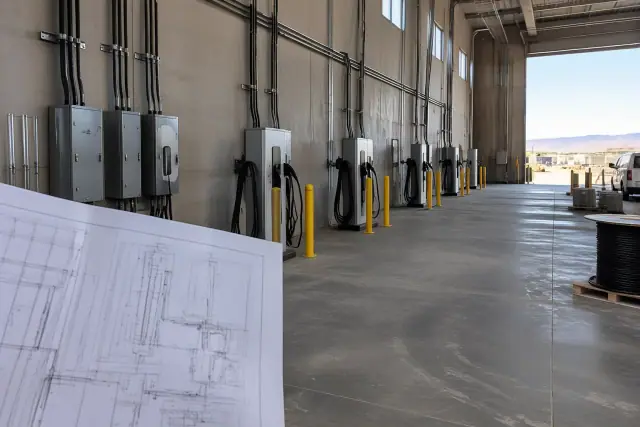
Unpowered schematics and bundled cables for a fleet EV charging installation in Mesa, AZ.

We map ports against vehicle movements, shift schedules, and future fleet size. Planning conduit routes and parking positions early helps avoid returning to dig up the same parking area when more vehicles arrive.

Request Estimate

Commercial Charger Installation

Commercial EV charger installation with concrete base and steel bollards in Mesa, AZ.

We mount commercial charging equipment, run conduit suited to outdoor exposure, and terminate the electrical connections. Hardwired installation removes the plug-and-receptacle connection point and suits equipment designed for repeated daily charging.

Request Estimate

Electrical Panel and Service Upgrades

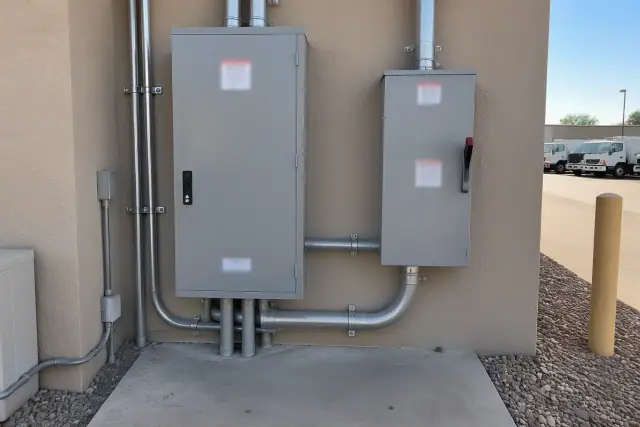
New electrical panel and service upgrade at a commercial utility alcove in Mesa, AZ.

Older properties may have 100-amp or 125-amp service with limited room for an added 40-amp or 50-amp charging circuit. We perform a load calculation before recommending an upgrade to 200-amp service or coordinating additional utility capacity.

Request Estimate

Dedicated Circuits and Charger Wiring

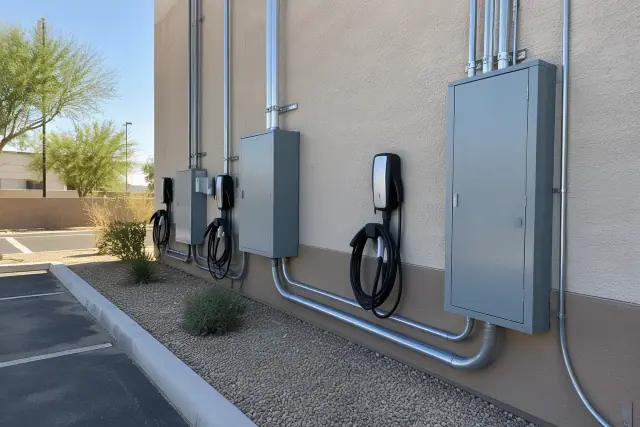
Heavy-gauge conduit and unpowered panel enclosures for fleet EV charging in Mesa, AZ.

We install dedicated charging circuits and check conductor sizing over the full route to each parking area. Long conduit runs receive a voltage-drop review, and connections are torqued to the equipment manufacturer's specifications.

Request Estimate

Multifamily and Apartment Charging

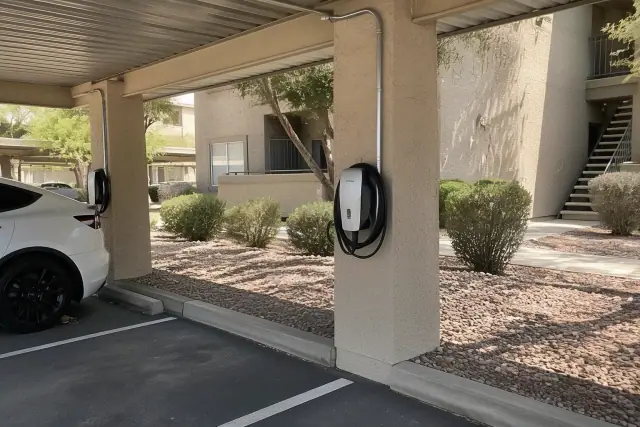
Wall-mounted EV charging station installation under an apartment carport in Mesa, AZ.

Apartment projects need a plan for shared electrical capacity, property management or HOA approval, tenant billing, and possible submetering. We build from the panel room to parking stalls, including communities near ASU Polytechnic, downtown Mesa, and Southern Avenue.

Request Estimate

EV Charger Repair and Replacement

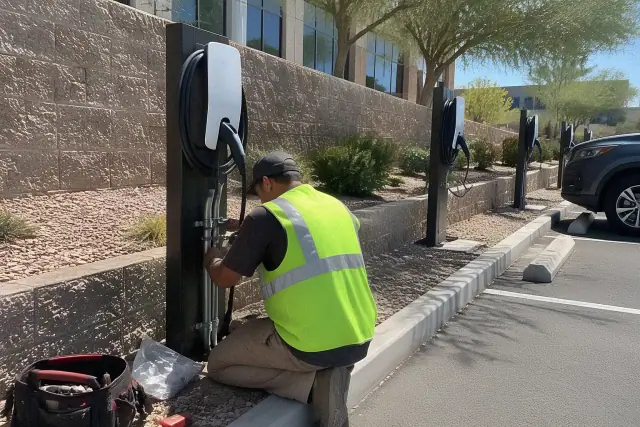
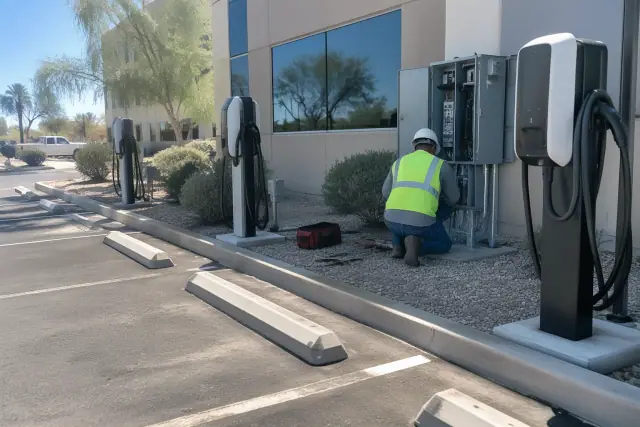
EV charger repair and replacement at a commercial office building in Mesa, AZ.

We trace charging faults to the breaker, connector, control board, or cable before recommending repairs. When aging hardware or growing demand limits your fleet, we assess whether replacement, added ports, or an electrical upgrade addresses the cause.

Request Estimate
Match Equipment to Fleet Use

Charger and Connection Options

The right configuration depends on how long vehicles can stay plugged in and how much capacity the property can provide. We compare charging speed, connection type, and load management as parts of the same plan.

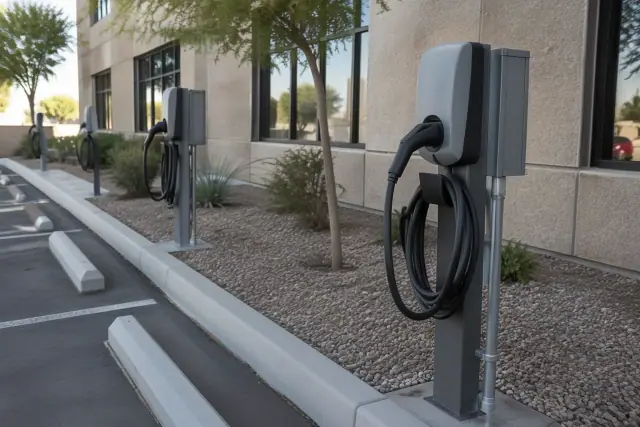
Level 2 EV charging station for overnight fleet parking outside a commercial building in Mesa, AZ.

Level 2 Charging for Overnight Parking

Level 2 charging on 208-240V circuits can suit fleets parked overnight or between shifts. Equipment output ranges from 3.3kW to 19.2kW per port, with selection based on vehicle requirements and available electrical capacity.

  • Overnight depot charging
  • Charging during longer shift breaks
  • Workplace and office-campus parking
  • Port counts matched to parked vehicles
  • Electrical capacity checked before equipment selection
Request Estimate
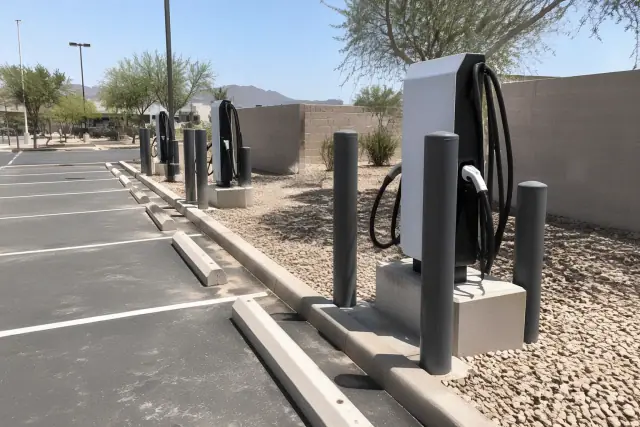
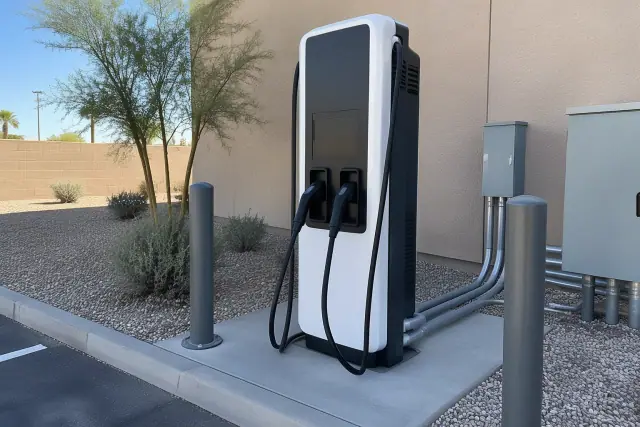
Completed DC fast charging station on a concrete pad with desert landscaping in Mesa, AZ.

DC Fast Charging for Short Stops

DC fast charging equipment ranges from 50kW to 500kW and can suit high-turnover fleets with limited parking time. These installations require careful utility coordination and may involve transformer or service upgrades.

  • Delivery vehicles returning between routes
  • High-mileage fleets with short dwell times
  • Rideshare vehicles needing a faster top-up
  • SRP or APS coordination for added capacity
  • Site electrical work planned alongside charger selection
Request Estimate
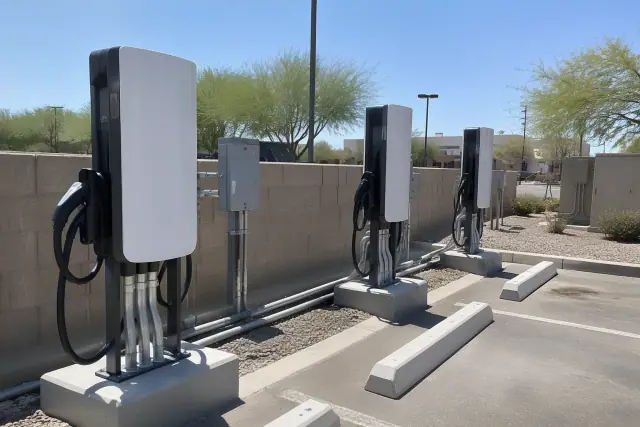
Hardwired commercial EV chargers installed on a concrete base with heavy-gauge conduit in Mesa, AZ.

Hardwired Commercial Chargers

A hardwired charger connects directly to its dedicated circuit. We review equipment requirements and conduit routing to create a permanent installation suited to the site's daily charging cycle.

  • Direct electrical termination at the charger
  • Fewer plug-and-receptacle connection points
  • Conduit selected for outdoor exposure
  • Connections torqued to manufacturer specifications
  • Each port tested under load before handoff
Request Estimate
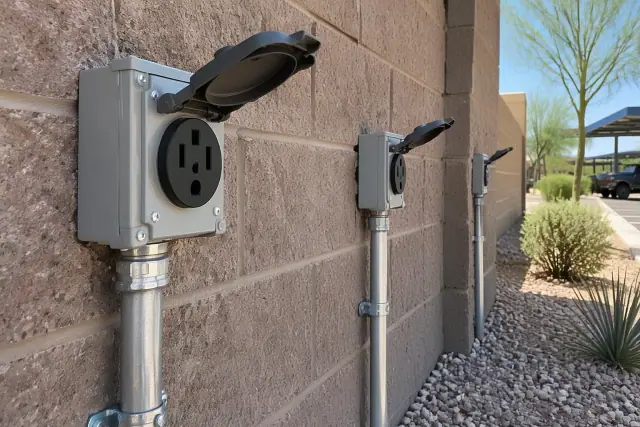
NEMA 14-50 outlet connections installed for a fleet EV charging station on a masonry wall in Mesa, AZ.

NEMA 14-50 Outlet Connections

A properly installed NEMA 14-50 outlet can support compatible portable EVSE or a mobile connector. We evaluate the outlet's 50-amp rating alongside circuit sizing and the charger's continuous-load requirements before recommending a plug-in arrangement.

  • Compatibility review for portable charging equipment
  • Outlet, breaker, and conductor assessment
  • Dedicated wiring for the charging location
  • Connection condition checked before use
  • An option for fleets still selecting permanent hardware
Request Estimate
Contractor photo of fleet EV charging station installation with load management in Mesa, AZ.

Charging with Load Management

Load management lets multiple charging ports share available electrical capacity. Where the site's load calculation supports it, this approach can help a fleet add charging in phases without immediately expanding the entire service.

  • Available amperage allocated across ports
  • Charging schedules aligned with shift patterns
  • Port expansion planned alongside vehicle growth
  • Existing electrical demand included in the assessment
  • Service upgrades evaluated against managed charging
Request Estimate
Planning Around Your Operation

Choose a Fleet Charging Approach

We weigh your vehicle mix, daily mileage, parking time, and utility capacity before choosing a configuration. Our recommendations also address outdoor exposure and the work needed to support additional ports later.

Licensed and Insured Electrical Work

Our crews hold Arizona Registrar of Contractors licensing and carry commercial liability insurance. We handle the permit and inspection process and design electrical work around the National Electrical Code, also published as NFPA 70.

Equipment for Mesa's Outdoor Conditions

Summer pavement can exceed 150 degrees and ambient air can climb past 110 degrees between June and August. We use NEMA 3R and 4 rated outdoor enclosures and assess conduit, cable exposure, and equipment placement for Sonoran Desert conditions.

Itemized Pricing Before Work Begins

You receive a written estimate after the site assessment, with the scope tied to port count, panel capacity, conduit distance, and required electrical work. We explain utility or infrastructure needs before installation begins.

Find the Cause of Charging Interruptions

Address Common Fleet Charging Problems

A charger fault may begin at the panel, along the circuit, or inside the equipment. We evaluate the full charging path so the proposed repair or upgrade addresses the problem affecting your fleet.

Request a Site Assessment

Repeated Breaker Trips

Undersized circuits or insufficient available capacity can interrupt charging. We review the connected load, breaker, and wiring before deciding whether the circuit needs correction or the site needs a broader capacity upgrade.

Heat-Damaged Charging Cables

Desert sun and heat can degrade exposed charging cables. We inspect cable and connector condition as part of troubleshooting and assess replacement needs without assuming the entire charger must be replaced.

Moisture and Corroded Connections

Monsoon-season moisture intrusion can leave outdoor connections corroded and unreliable. We inspect the affected enclosure and electrical connections to locate the fault and determine the appropriate repair.

Poor Output on Long Cable Runs

Chargers in parking areas far from the main building need conductor sizing that accounts for distance. We check voltage drop and test the port under load when charging output falls below expectations.

Too Few Ports for a Growing Fleet

More vehicles can overwhelm a layout designed for an earlier fleet size. We compare charging schedules, added ports, replacement hardware, and load management before recommending additional service capacity.

Missing Permits or Inspection Records

Unpermitted electrical work can leave installation defects unresolved and complicate warranty questions. We review the project scope, identify electrical work needing attention, and manage permitting and inspection for our installation work.

From Assessment to Handoff

Our Fleet Charger Installation Process

Whether the project starts with two ports or twenty, we follow a sequence that connects site assessment, electrical design, permits, installation, and testing. Utility needs and future expansion are considered before construction.

01.

Assess the Property and Fleet

We walk the property, review parking access, and discuss vehicle count, routes, and shift schedules. This establishes where chargers belong and how long vehicles can remain connected.

02.

Evaluate Electrical Capacity

We inspect the panel and service size and perform a load calculation using NEC Article 220. The result helps determine whether existing capacity, managed charging, or a panel and service upgrade fits the planned equipment.

03.

Define the Layout and Estimate

We plan charger positions, conduit routes, and capacity for future ports. Your written estimate identifies the installation scope and any trenching, panel work, or utility coordination the site requires.

04.

Arrange Permits and Utility Work

We handle permitting through the City of Mesa Building Safety Division for Mesa projects. Where more capacity is needed, we coordinate with Salt River Project or APS on service and transformer requirements.

05.

Install Conduit, Circuits, and Chargers

After permits clear, we route conduit, install the dedicated circuits, mount the charging equipment, and complete terminations. The build follows the approved scope and the equipment manufacturer's installation requirements.

06.

Test, Inspect, and Train Your Team

We test every charging port under load and arrange the final inspection. Before handoff, we walk your team through operation and basic troubleshooting so staff know how to use the installed equipment.

Plan Your Site's Next Step

Request a Fleet Charging Estimate

Tell us where your vehicles park, how many need charging, and when they return to service. Mesa EV Chargers can assess the property and prepare an itemized installation or upgrade estimate.

Fleet Charging Questions

Fleet EV Charging Station FAQs

Get answers about installation costs, equipment selection, electrical capacity, and the steps involved in bringing fleet charging to your Mesa property.

Discuss Your Fleet

Commercial Level 2 installation typically runs $3,000 to $12,000 per port including hardware and labor; installation labor alone is generally $400 to $1,500 per port when existing panel capacity is sufficient. Sites needing trenching, panel upgrades, or new utility service often reach $6,000 to $15,000 per Level 2 port with that infrastructure work included. DC fast charging installation ranges from roughly $4,000 to over $50,000 per port depending on transformer requirements and site electrical work. We provide an itemized estimate after assessing the property.

The phrase commonly refers to keeping battery charge between roughly 20 percent and 80 percent instead of routinely charging to 100 percent or running nearly empty. It is a charging guideline rather than a universal setting for every vehicle, so follow your vehicle manufacturer's guidance. For fleet planning, charge targets help determine how much parking time and how many ports your operation needs.

Under current IRS guidance, Section 30C does not cover equipment placed in service after June 30, 2026. For qualifying business property placed in service by that deadline, the credit is generally 6 percent, or 30 percent when prevailing wage and apprenticeship requirements are met, capped at $100,000 per item. Eligible census-tract and other requirements also apply. Confirm your project's eligibility with a tax professional before including a credit in its budget.

Fleet installation involves reviewing service capacity, sizing circuits, connecting equipment, and arranging permits and inspections. Mesa EV Chargers uses licensed electrical crews and manages the permitting and inspection process for its work. Have the property and equipment assessed before attempting a connection to an existing circuit.

Only if the charging equipment is compatible and the outlet and circuit are suitable for its continuous load. We inspect the breaker rating, wire sizing, outlet condition, and available capacity before recommending an existing connection. If the circuit is unsuitable, we specify dedicated wiring for the charger.

Mesa EV Chargers handles the electrical permitting process through the City of Mesa Building Safety Division and arranges inspection of the completed work. The project review includes load calculations, conductor sizing, and conduit routing. We test the installed ports under load before handoff.

Start with vehicle requirements and the time available between routes. Level 2 can fit overnight parking or longer shift breaks, while DC fast charging can suit high-turnover vehicles with shorter stops. We compare those needs with the site's electrical and utility capacity before recommending equipment.

Not every site needs an upgrade, but the existing panel rating alone cannot settle the question. We calculate building and charging demand and evaluate whether load management can keep the project within available capacity. If more service is needed, we include that work and utility coordination in the scope.

Hardwiring removes the plug-and-receptacle connection point and provides a permanent connection for compatible commercial equipment. A plug-in arrangement may suit portable EVSE or a fleet still deciding on permanent hardware. We check the equipment's installation requirements and intended daily use before recommending either approach.

Yes, we consider future vehicle count during initial conduit and panel planning. That helps identify where added ports could go and which infrastructure should be prepared during the first phase. Load management may also help stage expansion within the site's available capacity.

Shared electrical capacity, property management or HOA approval, tenant billing, and possible submetering all affect the plan. We assess the route from the panel room to the parking stalls and consider how demand may grow. The installation scope is developed around those property-specific needs.

Repeated trips, corroded connections, and heat-damaged cables need an electrical assessment to find the cause. We troubleshoot the breaker, connector, control board, and cable before recommending repair or replacement. If the real problem is fleet demand exceeding available capacity, we also evaluate added ports or an electrical upgrade.

Timing depends on the number of ports, electrical work, permits, and utility coordination. A straightforward installation on adequate existing service can move more quickly than a project needing a transformer or service upgrade. We review those dependencies during the site assessment before discussing the schedule.