Proudly serving Mesa, Gilbert, Chandler, Tempe, Queen Creek, Scottsdale & surrounding areasCall or Text 24/7: 602-559-1623
Guides

What Are Some Common Problems with Tesla Wall Chargers in Mesa, AZ?

At Mesa EV Chargers, we troubleshoot wall chargers that overheat, stop mid-session, trip breakers or report communication faults. In Mesa garages, summer heat and loose electrical connections can turn an intermittent charging problem into damage, so the first step is to identify the symptom before assuming the charger needs replacement.

Quick Summary

  • Common wall charger problems include overheating, loose terminal connections, slow or interrupted charging, breaker trips and firmware or communication errors.
  • Charging pauses can come from a schedule, heat protection, voltage fluctuation or a vehicle-side fault. Check the displayed message and when the interruption occurs.
  • Repeated breaker trips call for an electrician to check the charging circuit, connections and available panel capacity. A reset does not correct faulty wiring.
  • Stop using equipment with scorch marks, damaged cables or suspected water intrusion. Record the status-light pattern and arrange an inspection before charging again.

Common wall charger faults

Heat at the handle or terminals

Poor airflow and loose electrical connections can cause charging components to overheat. Repeated heating and cooling can also affect terminal connections, so recurring heat warnings need more than a change to the charging schedule.

Circuit and panel load

Circuit protection is sized at 125 percent of continuous charging current: a 50-amp circuit supports up to 40 amps of continuous output. An electrician must also confirm conductor sizing and the panel's remaining capacity.

Status lights and charging settings

Note the light color, blink pattern and vehicle message before changing settings. Compare them with the instructions for the exact charger model, and check whether a charging schedule explains the pause.

Wall charger inspection details

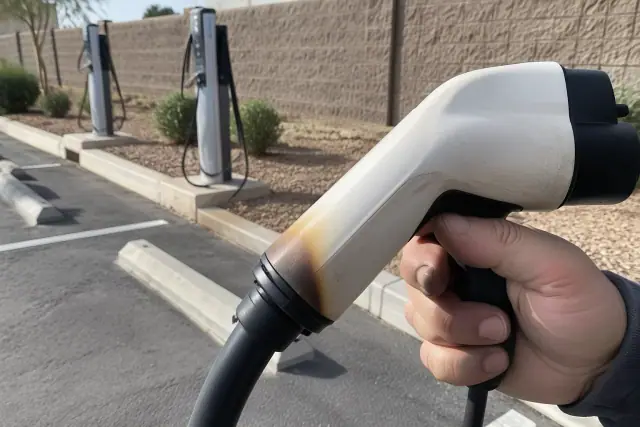
EV charging handle with heat discoloration

EV charging handle with heat discoloration in a Mesa, AZ parking lot.

Scorch marks around the connector can indicate heat damage. Stop using the charger and have the handle, cable and electrical connections evaluated.

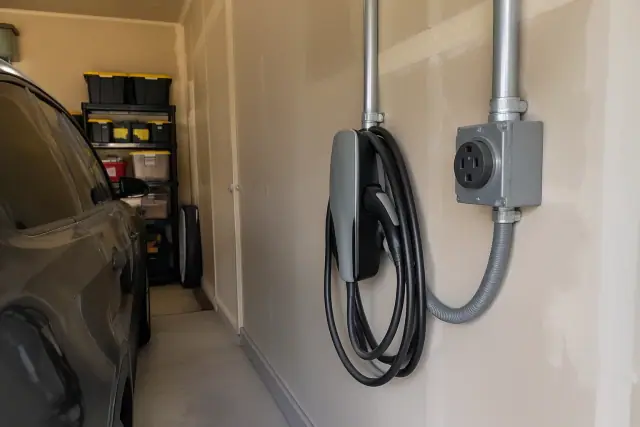
Hardwired EV charger beside a NEMA 14-50 outlet

Hardwired EV charger and NEMA 14-50 outlet on a drywall wall in a Mesa, AZ garage.

A hardwired connection removes the plug-and-receptacle interface. A NEMA 14-50 outlet supports a compatible portable charger but adds a connection that can loosen or overheat.

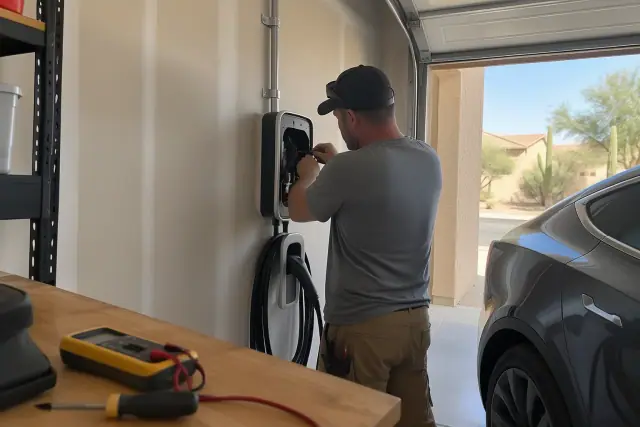
Electrician checking a garage EV charging circuit

Electrician checking a garage EV charging circuit in Mesa, AZ.

Testing at the panel and charger helps distinguish a supply problem from a failed charging unit. An electrician should handle voltage measurements and internal wiring checks.

Charging symptoms at a glance

Slower charging on hot afternoons

Heat protection can reduce output during July and August afternoons. A west-facing garage with poor ventilation may worsen the problem; record whether the slowdown follows the same weather and time pattern.

Pauses that follow a schedule

Charging settings can pause a session even when the hardware is working. An app reporting problem also needs to be distinguished from an actual interruption in power to the vehicle.

Repeated trips or visible damage

Recurring breaker trips, scorched connectors and water intrusion call for inspection before further use. Do not keep restarting a damaged charger to see whether the fault clears.

Repair or replace the charger

A loose terminal connection may be repairable, while a scorched connector or failed control board can make replacement more practical. Condition, installation quality and warranty status matter more than age alone.

Match charging symptoms to action

Wall charger symptoms, possible causes and next checks

Charging symptomPossible causeUseful next action
Handle or cable overheatsHeat buildup, poor airflow or a loose electrical connection.Stop charging if there is excessive heat or discoloration; arrange inspection of the cable and connections.
Session starts and stopsCharging schedule, thermal protection, voltage fluctuation or vehicle communication trouble.Record the vehicle message and timing; check the schedule before requesting electrical diagnosis.
Charging is slower than expectedConfigured output, heat protection or a supply-voltage problem.Note the displayed charging current and conditions; have an electrician verify the circuit before increasing output.
Breaker trips repeatedlyCircuit sizing, an electrical fault or a poor connection.Stop using the circuit and have an electrician identify the cause before resetting it again.
Red indicator or recurring fault messageThe exact light pattern may indicate a temperature, supply, internal or communication issue.Record the full blink sequence and consult the model-specific instructions; recurring faults need further diagnosis.
No lights and no chargingLoss of power to the charging unit.Check for a known outage or tripped breaker; leave internal voltage testing to an electrician.

Why a wall charger stops working

The fault may be in the supply circuit, the charger or the vehicle. An electrician can compare voltage at the panel and charging unit under load, inspect terminal connections and confirm that the configured output suits the circuit. A voltage drop of more than 3 percent under load can point to conductor sizing or an upstream connection problem. Thermal protection may reduce charging below the configured current when equipment gets too hot; a vehicle charge-port problem or an incompatible adapter can also interrupt a session. Firmware or network trouble can affect status reporting and online features without proving that the charging hardware has failed. Less common causes include contactor failure and water intrusion at outdoor installations.

Installation costs and panel capacity

Hardwired installation in Mesa typically runs $600-$1,800 and takes 3-5 hours for straightforward garage work; a NEMA 14-50 outlet installation is typically $400-$900 and 2-3 hours. A panel upgrade, when needed, typically costs $1,200-$3,000 and takes 4-8 hours. Panel distance, detached-garage trenching and outdoor conduit can expand the scope. A 100-amp service already supporting HVAC and pool equipment needs a load assessment before adding charging; a 200-amp rating alone does not establish spare capacity. Where capacity is limited, ask whether load management or a panel upgrade fits the property.

Common Follow-Up Questions

Can a reset fix a charger that keeps stopping? A model-specific restart may clear a temporary fault, but returning errors need diagnosis; it cannot repair a loose connection or heat damage. Should you replace an older unit immediately? Evaluate its condition and the failed component before deciding, especially when a repair would address one connection rather than a damaged control board. Is an outlet a better alternative? A compatible portable charger offers flexibility, while hardwiring removes the plug interface that can loosen or corrode.
Wall Charger Troubleshooting

Need help with a charging fault?

Tell Mesa EV Chargers when charging stops, what the indicator lights show and whether the breaker trips. Include the charger model, installation age and any visible damage so the inspection can focus on the circuit, equipment or vehicle connection.