Fewer Connections to Wear
A direct electrical connection removes the supply plug and receptacle from the charging setup. That reduces opportunities for loose contacts and heat-related wear during nightly use.
Mesa EV Chargers generally recommends hardwiring for daily Level 2 charging at a Mesa home or business because it removes the plug-and-outlet connection and can support higher charging output. A plug-in unit on a NEMA 14-50 outlet remains useful if you rent or expect to move. The better choice depends on your panel capacity, vehicle and plans for the property.
A direct electrical connection removes the supply plug and receptacle from the charging setup. That reduces opportunities for loose contacts and heat-related wear during nightly use.
Daily mileage, the vehicle's onboard charger and available panel capacity determine how much output is useful. A higher-rated charging unit cannot make a vehicle accept more power than its onboard charger allows.
Start with an electrician's panel load calculation and a review of the charger location. Confirm the wiring route, circuit rating and installation scope before choosing equipment.
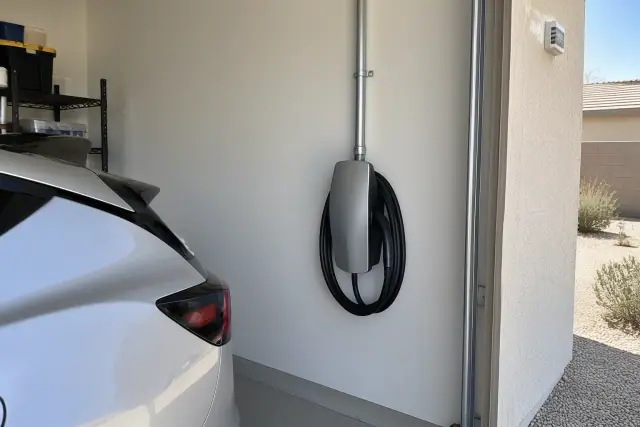
Supply wiring enters the wall-mounted charger directly, with no receptacle between the panel and the unit. The charging cable to the vehicle remains.
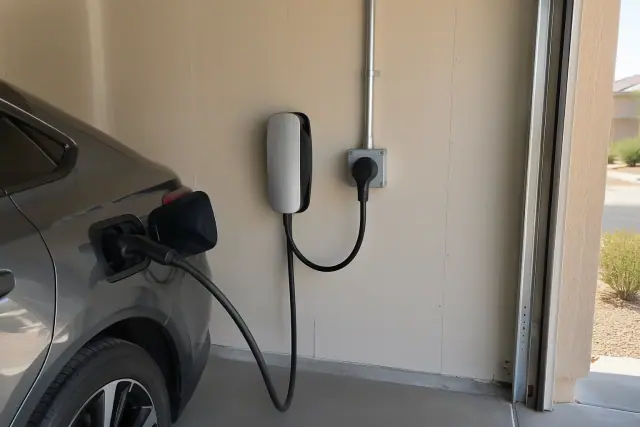
The removable supply plug makes the charging unit easier to take to another property. The outlet and plug also add contacts that can wear or loosen over time.
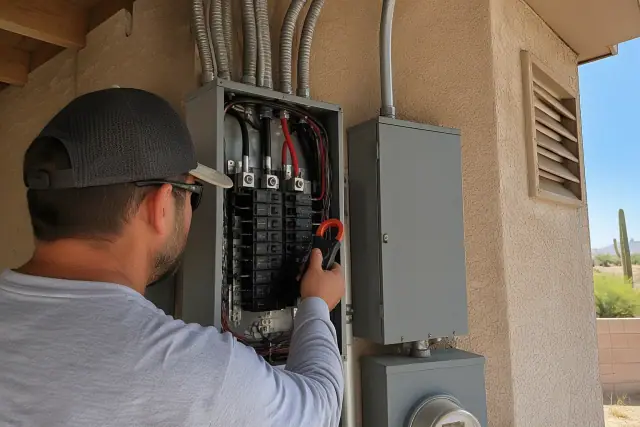
A panel assessment helps establish the available capacity before an EV circuit is added. This determines whether the desired charging output fits the existing electrical system.
Hardwiring suits owners who expect regular overnight charging at the same property. The fixed connection avoids repeated handling of a heavy supply plug.
A plug-in charging unit is easier to take with you when you move. Check the receiving property's electrical setup before assuming the same unit can be used there.
Heat discoloration or a loose plug calls for professional evaluation, even on a setup charging at 32 amps. Stop using affected equipment until the condition has been assessed.
Avoid selecting amperage from the charger's maximum rating alone. A vehicle with a lower onboard charging limit, limited panel capacity or modest daily mileage may not benefit from the highest setting.
| Decision factor | Hardwired Level 2 | Plug-In NEMA 14-50 |
|---|---|---|
| Continuous output in this comparison | Up to 48 amps on a suitable 60-amp circuit. | Up to 40 amps on a suitable 50-amp circuit. |
| Supply connection | Wiring terminates directly in the charger; no supply plug or receptacle. | A supply plug and receptacle add removable electrical contacts. |
| Moving the unit | An electrician must disconnect and relocate it. | The unit can be unplugged and moved to a compatible installation. |
| Outdoor placement | No separate supply plug; equipment must suit the location. | The outlet needs weather protection suitable for outdoor use. |
| Best fit | Daily charging at a property you plan to keep using. | Renters or drivers who expect to move the charging unit. |
For the home setup discussed here, hardwiring connects a dedicated 240-volt supply directly to the charger rather than to a receptacle. A properly configured 48-amp installation provides roughly 11.5 kW, but actual charging speed still depends on the vehicle. Common hardwired circuit ratings of 30 to 60 amps allow 24 to 48 amps of continuous charging when the equipment and installation support those settings. Removing the plug does not remove the cable that connects to the car; its routing still matters, especially around hot pavement.
Straightforward hardwired electrical work in Mesa typically runs $400 to $1,200, while plug-in installations typically range from $400 to $1,000. Wire-run length, panel location and trenching to a detached garage can change the scope; have any panel upgrade quoted separately. A straightforward outlet installation usually takes two to four hours, with hardwiring adding roughly an hour for termination work; permit and inspection scheduling is additional. For garages and carports in areas such as Dobson Ranch and Superstition Springs, summer heat, dust and monsoon exposure also affect equipment placement and protection. Hardwiring removes the exposed supply plug, while an outdoor plug-in setup needs appropriate weather protection.
What are the disadvantages of hardwiring? It can involve more installation labor, and relocation or replacement requires an electrician. What does the 80% rule mean? EV charging is treated as a continuous load, a category associated with loads expected to run for three hours or more. Ordinary circuit sizing limits charging to 80% of the breaker rating; this is separate from the vehicle's battery charge limit. Can the car stay plugged in? Generally, yes: charging systems manage charging at the selected battery limit, and staying connected can support thermal management during hot weather.
Share your vehicle, daily charging needs, panel details and proposed charger location. A review can compare hardwired and plug-in options for your Mesa property and identify the work needed before you approve an installation.